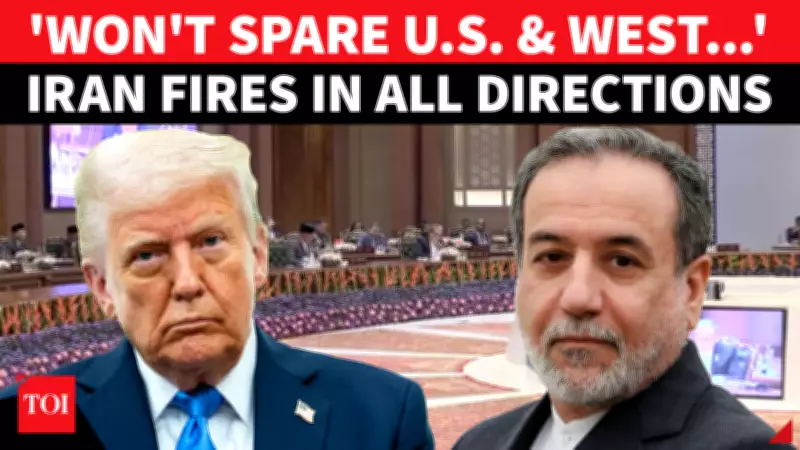
Iran's Foreign Minister Abbas Araghchi delivered a fiery message at the BRICS foreign ministers' meeting in New Delhi, urging member nations to condemn what he called 'unlawful aggression' by the United States and Israel against Tehran. Araghchi warned that the West's 'false sense of superiority and immunity' must be challenged, while India pushed for diplomacy, stability and safe maritime trade flows amid growing fears over the Strait of Hormuz crisis.
Iran's Call for Action
Araghchi's remarks came during a session focused on global security, where he emphasized that the West must be punished for its actions. He called on BRICS nations to take a united stand against what he described as 'unlawful aggression' by the US and Israel, urging them to condemn these actions and support Iran's right to self-defense. The Iranian minister stressed that the current crisis in the Strait of Hormuz is a direct result of Western provocations and that the international community must hold the aggressors accountable.
India's Diplomatic Push
In contrast to Iran's confrontational stance, India called for de-escalation and dialogue. Indian officials emphasized the importance of maintaining stability in the region and ensuring safe maritime trade flows, particularly through the Strait of Hormuz, a critical chokepoint for global oil shipments. India's position reflects its strategic interests in the region, as it relies heavily on energy imports from the Middle East. New Delhi urged all parties to exercise restraint and seek diplomatic solutions to avoid a broader conflict.

BRICS Divisions Exposed
The summit exposed deep divisions within BRICS over the Iran war, Gaza conflict and regional tensions. While some member nations, such as Russia and China, have shown support for Iran's position, others, like India and Brazil, have called for a more balanced approach. The differing views raised major questions about the bloc's unity and its future global role. Analysts noted that BRICS, which was founded as a platform for cooperation among emerging economies, is now grappling with geopolitical pressures that threaten to undermine its cohesion.
Strait of Hormuz Crisis
The crisis in the Strait of Hormuz has escalated in recent weeks, with Iran threatening to disrupt shipping in response to US sanctions and military posturing. The US has responded by deploying additional naval assets to the region, raising fears of a direct confrontation. Araghchi's comments at the BRICS summit are seen as an attempt to rally international support against the US and its allies, while also signaling Iran's readiness to open new fronts in its conflict with the West.
Global Implications
The ongoing tensions have significant implications for global energy markets, as the Strait of Hormuz handles about 20% of the world's oil supply. Any disruption could lead to a sharp increase in oil prices, affecting economies worldwide. The BRICS summit's failure to reach a consensus on the issue highlights the challenges of multilateral diplomacy in a polarized world. As the crisis continues to unfold, the international community will be watching closely to see how the major powers navigate this volatile situation.