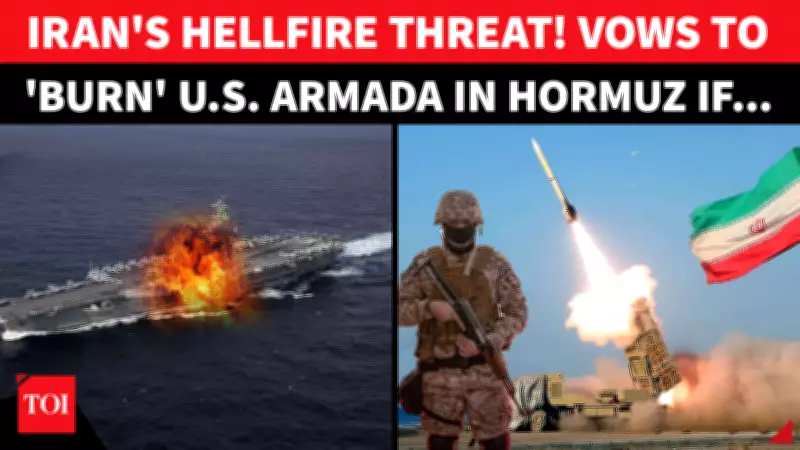
Iran's powerful Islamic Revolutionary Guard Corps (IRGC) has issued a fresh and fiery warning to the United States. A senior naval official stated that Iran is prepared to deploy "surprise tactics" if the United States makes what it calls another miscalculation. The elite Iranian paramilitary force went a step further, threatening to set U.S. warships ablaze at sea as tensions escalate in the Persian Gulf.
IRGC Official Issues Stark Warning
Speaking to Iranian state media, IRGC Navy political deputy Mohammad Akbarzadeh claimed that Iran has developed new, unconventional capabilities specifically designed to counter U.S. forces in regional waters. He emphasized that these capabilities would be used in response to any perceived aggression. The warning comes amid rising tensions over the strategically vital Strait of Hormuz, a key global artery for oil shipments that has become a flashpoint in the ongoing standoff between Iran and the United States.
Strategic Implications
The Strait of Hormuz is one of the most important chokepoints for global energy supplies, with about one-fifth of the world's oil passing through it. Any disruption there could have severe consequences for the global economy. Iran has previously threatened to block the strait in retaliation for sanctions or military action. The latest rhetoric signals that Tehran is prepared to escalate its response if provoked.

Akbarzadeh's comments underscore the heightened state of alert in the region. The IRGC has a history of using asymmetric tactics, including speedboats, mines, and anti-ship missiles, to challenge U.S. naval superiority. The threat to set warships ablaze suggests Iran may have developed new weapons or strategies, possibly including drone swarms or advanced missiles.
Context of Rising Tensions
This latest threat comes after months of increased U.S. military presence in the Persian Gulf. The Trump administration has adopted a hardline stance against Iran, including sanctions and military posturing. Iran, in turn, has responded with defiance and warnings of retaliation. The situation remains volatile, with both sides signaling their readiness for confrontation.
International observers have called for de-escalation, warning that any miscalculation could trigger a broader conflict. The United Nations and other global bodies have urged dialogue to reduce tensions. However, the rhetoric from Tehran suggests that Iran is prepared to defend its interests aggressively.
Previous Incidents
In recent years, there have been several close encounters between Iranian and U.S. forces in the Persian Gulf. In 2019, Iran shot down a U.S. drone, and there were attacks on oil tankers that the U.S. blamed on Iran. The IRGC has also seized commercial vessels in the Strait of Hormuz, raising concerns about freedom of navigation.
The new threats from Akbarzadeh are seen as part of Iran's strategy to deter U.S. actions by raising the potential cost of military engagement. By publicizing its unconventional capabilities, Iran aims to project strength and caution the U.S. against any moves that could be perceived as aggression.
Conclusion
The standoff over the Strait of Hormuz continues to be a critical flashpoint in U.S.-Iran relations. With both sides unwilling to back down, the risk of accidental escalation remains high. The IRGC's latest warning serves as a reminder of the volatile nature of the region and the potential for conflict that could have far-reaching consequences.