

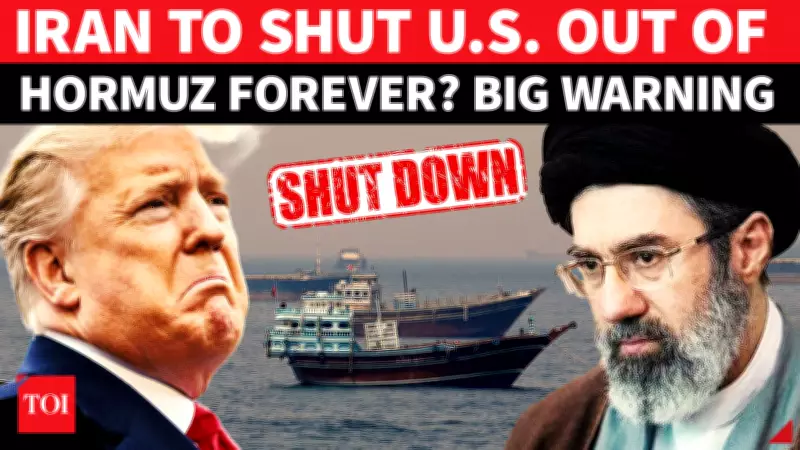
Iran is shifting its strategy in the Strait of Hormuz from military confrontation to unyielding legal sovereignty. Speaking to RT, prominent Iranian analyst Foad Izadi completely dismantled the U.S. Navy's presence in the Middle East, reminding Washington that it is 11,000 kilometers away and only has rights in the Gulf of Mexico.
Legal Rights Over the Strait
Explaining that the strategic chokepoint contains no 'international waters' and belongs entirely to Iran and Oman, Izadi argued that Tehran has the full legal right to charge navigation fees—just like Turkey, Australia, and Canada do in their waterways. He emphasized that the United States has no legal standing to operate in the region without permission from the littoral states.
Implications for Global Shipping
The analyst's remarks come amid rising tensions in the Persian Gulf, where the Strait of Hormuz serves as a critical passage for about 20% of the world's oil. Izadi's assertion that Iran can impose tolls could have significant economic repercussions for global energy markets and maritime trade routes.

Izadi also criticized the U.S. Navy's longstanding presence in the region, calling it an unnecessary provocation. He noted that Iran's approach is now rooted in international law, specifically the United Nations Convention on the Law of the Sea (UNCLOS), which recognizes the sovereignty of coastal states over their territorial waters.
The analyst's statements have sparked debate among international legal experts, with some supporting Iran's interpretation of maritime law while others caution against unilateral toll imposition. Meanwhile, the U.S. Navy has not officially responded to Izadi's comments.






