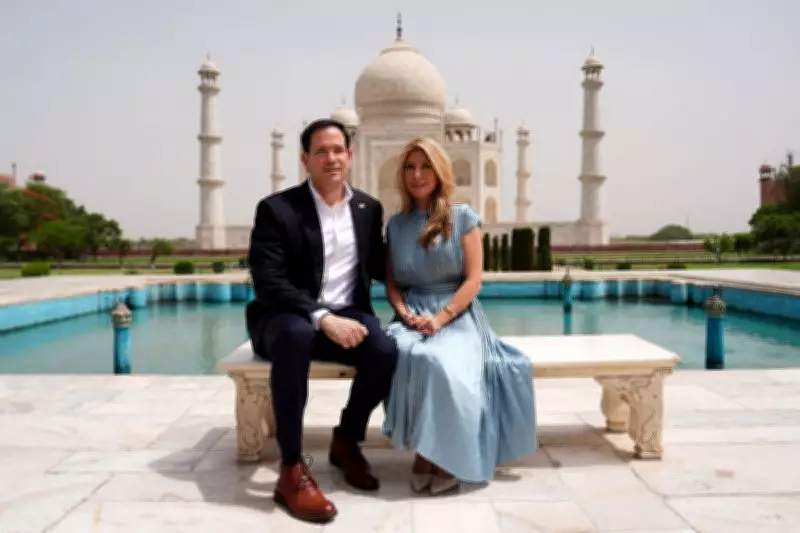
The Iranian consulate in India has issued a statement following the visit of United States Secretary of State Marco Rubio to the Taj Mahal. The consulate remarked that if only Mr. Rubio had known more about Iran's rich history and culture, he would have appreciated the deep historical connections between Iran and India.
Rubio's Visit to the Taj Mahal
Marco Rubio, the US Secretary of State, visited the iconic Taj Mahal in Agra during his official trip to India. The visit was part of his diplomatic engagements aimed at strengthening bilateral ties between the United States and India.
Iranian Consulate's Response
In a statement, the Iranian consulate in India expressed a nuanced perspective. The consulate noted that the Taj Mahal itself is a testament to the shared cultural heritage of the region, with its architecture reflecting Persian influences. They suggested that a deeper understanding of Iran's contributions to art and architecture could enrich such visits.

The statement further emphasized the importance of cultural diplomacy and mutual respect among nations. The consulate highlighted that Iran and India have centuries-old ties that go beyond politics, encompassing trade, literature, and philosophy.
Broader Implications
This exchange comes at a time of complex geopolitical dynamics. The US and Iran have had strained relations for decades, while India maintains a balanced approach, engaging with both nations. The Iranian consulate's remarks underscore the potential for cultural exchanges to bridge gaps in understanding.
Observers note that such statements reflect Iran's desire to promote its cultural narrative on the global stage, especially in countries like India where Persian influence is historically significant.