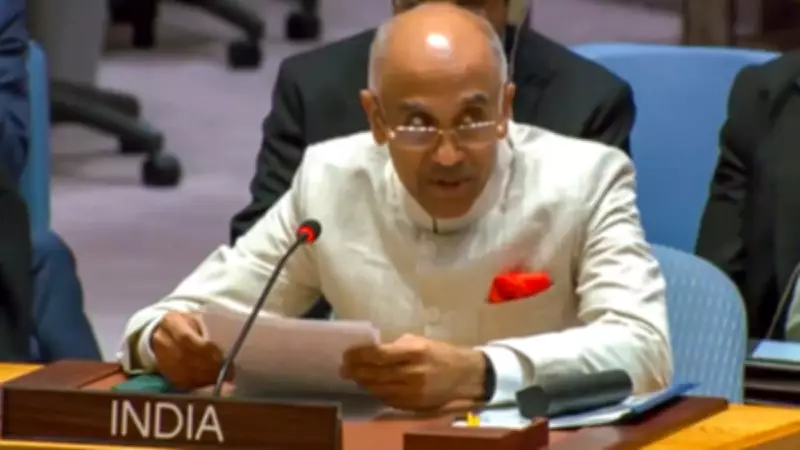
In a strong diplomatic move, India has once again asserted at the United Nations that Jammu and Kashmir was, is, and will remain an integral part of India. The statement came as a direct response to Pakistan's repeated attempts to raise the issue on international platforms. India's Permanent Representative to the UN, Ambassador Ruchira Kamboj, delivered a robust speech, emphasizing that there is no room for any third-party mediation on the matter.
India's Unwavering Stance
During a UN Security Council session, Ambassador Kamboj categorically stated that Jammu and Kashmir is an inalienable part of India. She reminded the international community that the region's accession to India in 1947 was legal and complete. The Indian delegation also highlighted that all territories under Pakistan's illegal occupation, including Gilgit-Baltistan, are part of India.
Pakistan's Failed Attempts
Pakistan has been persistently trying to internationalize the Kashmir issue, but its efforts have repeatedly failed due to India's strong diplomatic counter. At the UN, India pointed out that Pakistan's narrative is based on falsehoods and that the world body should not entertain such baseless claims. India also cited the 1972 Simla Agreement, which states that bilateral issues should be resolved through direct negotiations, not third-party involvement.

Global Support for India
Several countries have expressed support for India's position, recognizing that Jammu and Kashmir is an internal matter of India. The United Nations has also maintained that the issue should be resolved bilaterally between India and Pakistan. India's diplomatic outreach has been effective in isolating Pakistan's narrative on the global stage.
Historical Context
Jammu and Kashmir acceded to India in 1947 under the Instrument of Accession, which was accepted by the Government of India. Since then, India has consistently maintained that the region is an integral part of the country. Despite Pakistan's illegal occupation of parts of the region, India has never recognized any claim over those territories.
Recent Developments
In recent years, India has taken several steps to integrate Jammu and Kashmir fully into the Indian Union. The abrogation of Article 370 in 2019 was a historic move that brought the region on par with other states. The government has also focused on development and peace initiatives in the region, which have been widely appreciated by the local population.
Conclusion
India's strong stance at the United Nations has once again reaffirmed that Jammu and Kashmir is, was, and will always be an integral part of India. Pakistan's attempts to raise the issue have been effectively countered, and the international community has largely supported India's position. The diplomatic victory underscores India's commitment to its territorial integrity and sovereignty.