

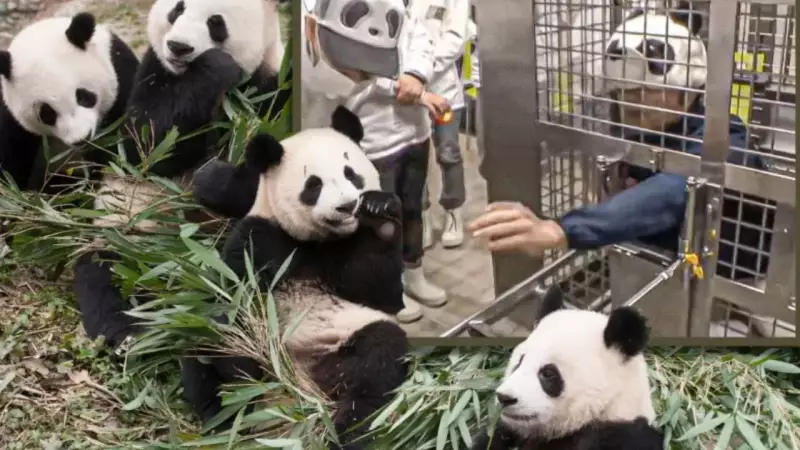
In June 2025, a significant chapter closed for Adventure World in Wakayama, Japan. The park bid farewell to its final four giant pandas, returning them to China as per a long-term loan agreement. This departure marked the end of an era spanning over three decades, during which these beloved black-and-white animals served as the park's main attraction, drawing crowds from across Japan and the globe.
From Void to Innovation: The Birth of the Panda Love Club
Faced with an empty panda enclosure and no immediate plans for new arrivals, the park's administration chose a path of creativity over gloom. Instead of seeking direct replacements, they launched an unexpected and immersive initiative to honour the legacy of their former residents. This led to the creation of the "Panda Love Club," a 90-minute interactive experience that has become one of the most unique offerings in any zoo worldwide.
This programme allows visitors to step into the shoes of animal caretakers. Participants engage in authentic tasks such as preparing food, conducting enclosure checks, making observations, and maintaining detailed animal files. The goal is to provide a hands-on understanding of the daily responsibilities involved in wildlife management.

Role Reversal: Humans in the Enclosure
The most memorable and talked-about segment of the experience involves a profound role reversal. Park staff members, donning realistic panda headgear and full black-and-white costumes, sit inside the animal enclosures behind bars. Visitors are then invited to gently feed these "human pandas" pieces of apple.
This poignant moment is designed to spark laughter but also to encourage deep reflection. It highlights the themes of vulnerability, dependence, and trust inherent in the caretaker-animal relationship. By placing humans in the position of the cared-for, the activity fosters a new empathy and underscores the seriousness required for animal conservation and welfare.
A Broader Shift for Japan's Panda Landscape
The experience at Adventure World is part of a larger national transition. The return of these four pandas signalled a major shift for Japan. By January 2026, the country will experience its first month without any giant pandas since 1972. This is because Tokyo's Ueno Zoo is also set to return its remaining twin pandas, Xiao Xiao and Lei Lei, to China, with no replacements currently planned.
For generations of Japanese visitors, giant pandas have symbolised much more than zoo exhibits. They represented international friendship, cultural diplomacy, and a shared fascination. Their absence, therefore, is not merely a logistical change for zoological parks but also an emotional moment for the public that grew up admiring them.
Adventure World's innovative response transforms a perceived loss into a powerful, ongoing educational opportunity. The park emphasises that the Panda Love Club is not purely comedic but a meaningful tool to help visitors comprehend the deep bond between pandas and their caretakers. It reinforces a crucial message: conservation efforts and the lessons they teach do not end when the animals themselves depart. The legacy of care, responsibility, and connection continues in new and imaginative forms.






