

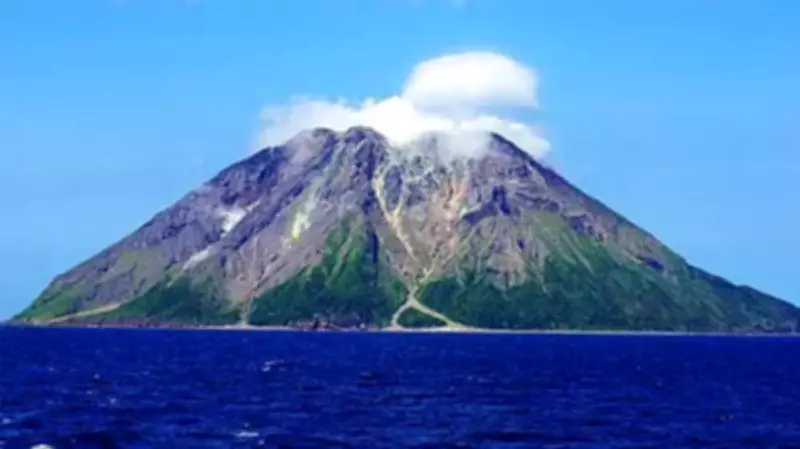
Japan's Ancient Kikai Supervolcano Shows Signs of Magma Re-injection
One of the most significant volcanic eruptions in Earth's recent geological history occurred approximately 7,300 years ago in southern Japan. Today, groundbreaking research reveals that this same volcanic system, known as the Kikai Caldera, is gradually being refilled with magma beneath the ocean floor. While this discovery does not signal an imminent eruption, it provides unprecedented insights into how supervolcanoes rebuild themselves over millennia.
The Formation and Significance of Kikai Caldera
Located underwater off the coast of Kyushu Island in Japan, Kikai Caldera formed following a cataclysmic eruption around 7,300 years ago. This event stands as the largest volcanic eruption recorded during the Holocene epoch, the current geological period spanning approximately the last 11,700 years.
A caldera forms when a volcano erupts with such tremendous force that it completely empties its magma chamber. The surface above the depleted chamber then collapses into the resulting void. What makes Kikai Caldera particularly valuable for scientific study is its underwater location, which enables researchers to utilize advanced imaging techniques to examine its structure in detail.

Compelling Evidence of Magma Re-injection
Recent research conducted by Kobe University and published in the journal Communications Earth & Environment presents compelling evidence that the magma reservoir beneath Kikai Caldera is gradually being rebuilt. Scientists employed seismic imaging technology, sending sound waves deep into Earth's crust to visualize structures hidden beneath the surface.
Their investigation revealed a substantial magma-rich zone directly beneath the caldera, positioned similarly to the ancient volcano's original location. Geophysicist Nobukazu Seama emphasized the importance of this discovery, stating: "We must understand how such large quantities of magma can accumulate to understand how giant caldera eruptions occur."
This finding demonstrates that the volcano is not dormant but rather part of an ongoing natural geological cycle.
Fresh Magma Injection and Ongoing Geological Activity
One of the most crucial aspects of the research is the determination that the magma currently present beneath Kikai is not merely residual material from the ancient eruption. Instead, it represents newly injected magma rising from deeper within Earth's mantle. This indicates the volcano remains fundamentally active at its core.
Another significant discovery involves a growing lava dome that has been developing for approximately 3,900 years. Analysis of this newly formed dome's composition reveals it differs from the magma present during the earlier eruption. As Seama noted: "The magma that is now present... is likely newly injected magma."
This process, termed magma re-injection, represents the key mechanism through which supervolcanoes gradually reconstruct themselves over geological timescales.
Implications for Future Volcanic Activity Monitoring
While the concept of a refilling supervolcano might seem alarming, experts emphasize this represents a very slow, natural geological process. Currently, there is no immediate cause for concern and no indicators of an impending eruption. Instead, this discovery contributes substantially to our global understanding of volcanic systems.
The research suggests similar processes could be occurring in other supervolcanoes worldwide, including those in the United States and Indonesia. This knowledge will enable scientists to enhance monitoring capabilities and refine prediction methods for future volcanic activity.
Seama articulated the ultimate research objective: "Our ultimate goal is to become better able to monitor the crucial indicators of future giant eruptions."
The gradual refilling of Japan's Kikai supervolcano serves as a powerful reminder of Earth's constantly evolving nature. While the discovery highlights ongoing geological activity, it also represents significant progress in understanding the complex systems that shape our planet. As researchers continue investigating volcanic systems globally, they move closer to unraveling the mysteries of supervolcanoes and their long-term behavior patterns.






