

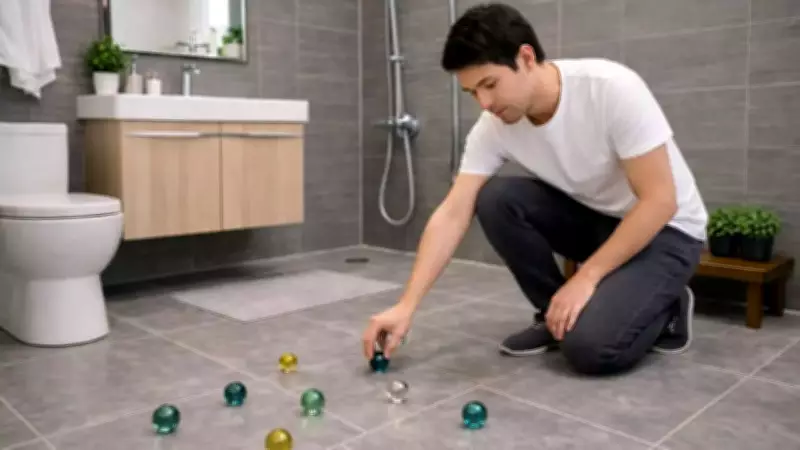
Japan's Viral Marble Ball Test: A Simple Earthquake Safety Check Explained
A fascinating trend circulating online has captured global attention and left many viewers intrigued. Numerous videos show residents across Japan carefully placing or dropping small marble balls onto their bathroom floors and observing how they move. At first glance, this activity appears random or even playful, but it actually serves a practical purpose deeply connected to home safety in earthquake-prone regions.
The Practical Explanation Behind the Marble Ball Test
The practice, commonly referred to as the "marble ball test," is directly linked to Japan's extensive experience with seismic activity. Since the country regularly experiences earthquakes, residents have developed simple methods to check whether their homes might have shifted following tremors. Dropping a marble on the floor provides a quick, informal way to detect subtle changes in floor level that might otherwise go unnoticed.
While this test is not used by professional engineers, it has sparked considerable curiosity worldwide as people seek to understand its purpose and effectiveness.

How the Marble Ball Test Actually Works
The marble ball test is remarkably straightforward. A small glass marble or metal ball is placed on a bathroom floor surface. Once positioned, the individual watches carefully to see whether the marble remains stationary or begins rolling.
If the floor is perfectly level, the marble should stay mostly in place. However, if it starts rolling steadily in one direction, this may indicate that the floor has developed a slight slant. The principle works because round objects naturally move toward the lowest point on any surface. Even minor tilts that are difficult for the human eye to detect can become apparent when a marble begins moving.
Many Japanese residents use this test casually at home after experiencing an earthquake or when they suspect their house might not be perfectly level anymore.
Why Bathrooms Are the Preferred Location for This Test
Bathrooms are typically considered the best places to conduct this experiment for several important reasons. First, bathroom floors are usually smooth and flat, often featuring tiles that allow marbles to roll freely without getting stuck on uneven surfaces.
Another significant factor is that bathroom floors are normally designed with a slight slope to enable proper water drainage toward the drain hole. This intentional design means the floor should be evenly balanced for functional purposes. If a marble rolls strongly in one particular direction, it might raise questions about whether the floor's balance has been compromised.
However, it's crucial to understand that bathroom floors are intentionally sloped for drainage, which means some marble movement might be expected even in structurally sound buildings.
The Deep Connection with Japan's Earthquake Reality
Japan sits atop several tectonic plates, making earthquakes a regular part of daily life. The country experiences thousands of tremors each year, though most are minor and cause minimal damage. Even these smaller earthquakes can sometimes cause subtle structural movements over time. Buildings may shift slightly, and floors can develop gentle tilts that residents might not notice immediately.
Because of this constant seismic activity, some residents have developed quick methods to check whether their homes might have moved. The marble ball test represents one of those simple observational techniques that people can perform without specialized tools. If a marble suddenly rolls in a direction where it never rolled before, it might prompt someone to examine their home more carefully.
Still, professionals emphasize that a marble alone cannot determine whether a building is structurally safe, and proper assessments require expert evaluation.
The Social Media Phenomenon Behind the Trend
The marble ball test gained widespread popularity primarily through social media platforms, where users share pictures and short videos demonstrating how to perform the test by rolling marbles on bathroom floors. For viewers unfamiliar with the concept, these videos often appear surprising or mysterious. Many initially assumed it represented a peculiar Japanese habit or cultural practice.

In reality, the test is more of a curiosity-driven experiment than a nationwide routine. Some people try it out of genuine interest, while others use it as a rough method to observe their living environment. The simplicity of the test made it perfect for viral content, helping spread the idea far beyond Japan's borders and sparking global conversations about earthquake preparedness.
Can This Test Actually Reveal Structural Problems?
The underlying principle of the marble test is based on sound physics, but its reliability for structural assessment is limited. Building floors are never perfectly flat surfaces. Even in newly constructed buildings, minor slopes can be detected due to standard construction techniques. As mentioned earlier, bathroom floors are specifically designed with slopes to facilitate water drainage.
Therefore, when a marble rolls on a bathroom floor, it doesn't necessarily indicate that the building has shifted or become unsafe. Structural engineers use precise instruments to determine whether a building is leaning or settling. These professional tools can detect minute changes that cannot be accurately measured using household objects.
The marble test may generate interest and awareness, but it should never replace professional assessment when there are genuine concerns about a building's structural integrity.
A Small Trick Reflecting Everyday Caution
The marble ball test method demonstrates how people living in earthquake-prone areas develop small habits to increase their environmental awareness. Although not scientifically rigorous, this approach illustrates how individuals remain vigilant about their surroundings. Simple observations can encourage people to be more attentive to changes in their living environments, particularly in regions where earthquakes are common.
Watching a marble roll across a floor might seem trivial at first glance. Yet behind this simple act lies a meaningful reminder of how people adapt to natural risks and seek accessible ways to monitor their homes' stability. This viral trend ultimately reveals how everyday citizens in seismic zones incorporate practical wisdom into their routines, blending traditional observation with modern sharing through social media platforms.





