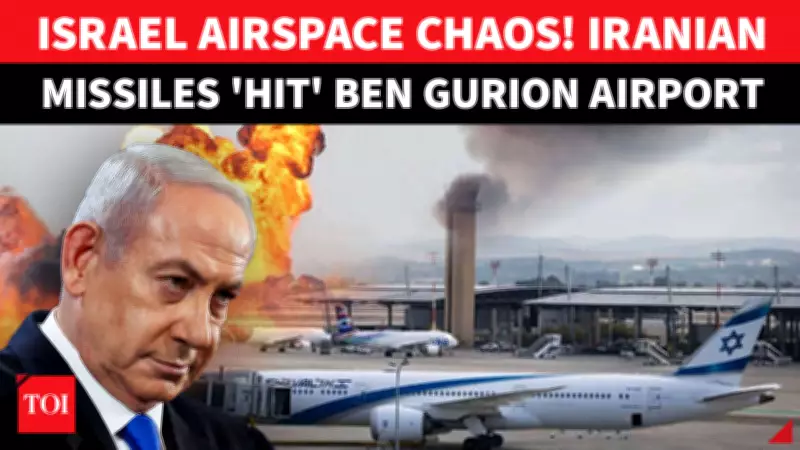
Iran Strikes Israel's Ben Gurion Airport with Ballistic Missiles
In a significant escalation of tensions in the Middle East, Iran has launched a ballistic missile attack targeting Israel's Ben Gurion International Airport. According to reports from Israeli media, the assault occurred recently, with missiles including the Fattah and Khorramshahr-4 types being fired towards central Israel.
Details of the Attack and Immediate Aftermath
The Israeli military has confirmed that a small number of missiles were part of this salvo. Fortunately, there have been no reports of injuries following the attack, as stated by Israeli sources. Initial assessments indicate that the missiles did not cause direct impacts in residential areas, though fragments from the projectiles reportedly landed in some locations near the airport.
This incident marks a direct military action by Iran against Israeli infrastructure, raising concerns about further retaliation and the broader regional stability. The targeting of Ben Gurion Airport, a key international hub, underscores the strategic nature of the strike.

Broader Context and Regional Implications
The attack comes amid heightened hostilities in the Middle East, with various actors involved in ongoing conflicts. Recent developments include:
- Arab fighters intensifying operations against U.S. interests in Jordan, reportedly in retaliation for actions against Iran and its leadership.
- Hezbollah deploying elite forces in Lebanon, leading to escalated fighting with Israeli troops in southern Lebanon.
- Iranian forces claiming strikes on U.S. military assets, such as the USS Abraham Lincoln aircraft carrier in the Sea of Oman.
- Satellite imagery showing impacts from repeated Iranian missile strikes on a U.S. military base in Kuwait.
These events highlight a complex web of alliances and confrontations, with Iran positioning itself as a central player opposing both Israel and the United States. Diplomatic tensions have also flared, with Iranian officials making bold statements against U.S. policies and leadership.
Analysis of the Military and Political Fallout
The use of ballistic missiles like the Fattah and Khorramshahr-4 demonstrates Iran's advancing military capabilities and willingness to engage in direct attacks. Israeli authorities are likely to assess the damage and consider response options, which could include diplomatic measures or further military actions.
This attack may influence regional dynamics, potentially affecting investment flows and security spending among Arab states, as hinted in related reports. The situation remains fluid, with international observers closely monitoring for any escalation or de-escalation efforts.
In summary, Iran's missile strike on Ben Gurion Airport represents a critical moment in the ongoing Middle East conflicts, with no immediate casualties reported but significant implications for regional security and international relations.