

Japan's Waters Reveal Bizarre 'Skeleton Panda' Marine Creature
Marine exploration continues to unveil extraordinary life forms that have remained concealed beneath ocean surfaces for decades. In recent years, divers and scientists have increasingly employed underwater photography and meticulous observation techniques to identify species previously undocumented in scientific literature. One particularly remarkable discovery has emerged from the waters surrounding Kumejima Island in Japan's Okinawa Prefecture.
The Initial Discovery by Scuba Divers
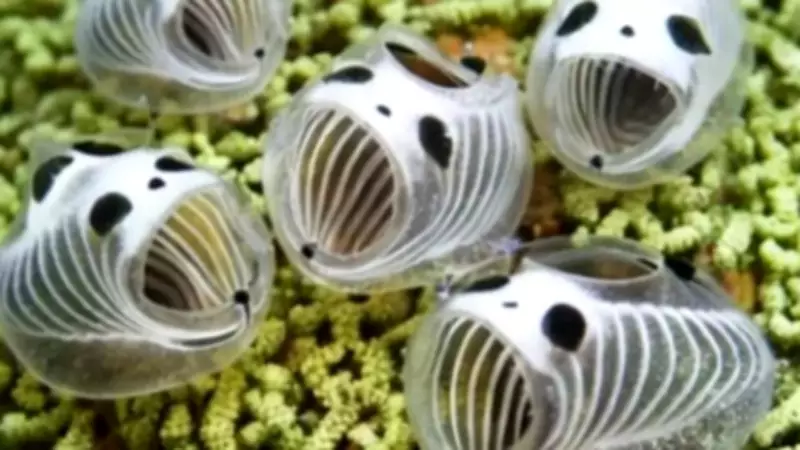
Local scuba divers exploring approximately 20 meters below the ocean surface near Kumejima Island first encountered this unusual organism. The creature immediately captured attention due to its peculiar appearance, prompting divers to photograph and share images online. Measuring merely 2 centimeters in length, the transparent organism displayed white rib-like patterns and dark facial markings that created an uncanny resemblance to a panda's face.
These viral images eventually reached marine researchers, including Dr. Naohiro Hasegawa from Hokkaido University, who suspected they might represent a previously undocumented species. The creature quickly gained the nickname "underwater panda" across social media platforms due to its distinctive visual characteristics.

Scientific Identification and Naming
Following the initial discovery, Dr. Hasegawa traveled to Kumejima Island to conduct direct examinations. After collecting specimens from the original dive site, detailed analysis confirmed the organism as a new species of colonial ascidian. The research, published by scientists Naohiro Hasegawa and Hiroshi Kajihara, formally identified the creature as Clavelina ossipandae, commonly known as the Skeleton Panda Sea Squirt.
The scientific paper titled "Graveyards of Giant Pandas at the Bottom of the Sea? A Strange-Looking New Species of Colonial Ascidians in the Genus Clavelina" explained that ascidians are marine invertebrates that typically live attached to surfaces and often form colonies. The name derives from the creature's appearance when multiple individuals cluster together, resembling miniature panda skeletons.
The Science Behind the Panda Illusion
Researchers clarified that the panda-like appearance results from internal anatomical structures rather than actual skeletal features. The white "ribs" visible through the transparent body are actually translucent transverse vessels located in the pharynx, forming part of the animal's internal filtering system. These horizontal vessels create patterns resembling skeletal ribs when viewed through clear tissue.
Dark spots positioned around the head region enhance the panda facial illusion. When numerous individuals grow together in colonies, the collective arrangement can appear like groupings of tiny panda skeletons. Scientists emphasized this represents a biological illusion created by specialized anatomy rather than genuine skeletal structures.
Ecological Function and Habitat
Despite its minuscule size, the Skeleton Panda Sea Squirt performs crucial ecological functions through filter feeding. Like other ascidians, it pumps seawater through its body, trapping bacteria, plankton, and microscopic debris using specialized gill mesh supported by the transparent transverse vessels. This feeding process helps maintain water clarity in coral reef ecosystems by removing suspended particles.
The species has primarily been observed around Kumejima Island, where unique environmental conditions including coral reefs, rocky surfaces, and nutrient-rich ocean currents create ideal habitats for colonial ascidians. These currents transport microscopic food particles essential for filter-feeding organisms like the Skeleton Panda Sea Squirt.
Conservation Status and Research Significance
Currently considered rare due to limited observations within a specific geographic area, scientists acknowledge that apparent rarity might reflect insufficient exploration rather than true scarcity. Many marine organisms remain undocumented because vast ocean areas remain unexplored. Ongoing diving surveys and marine research may reveal additional populations throughout the Pacific Ocean.

This discovery highlights how little we understand about marine biodiversity and demonstrates that even tiny organisms can significantly impact ocean ecosystems. Sea squirts like the Skeleton Panda play vital roles in maintaining water quality, which benefits coral reefs by allowing sunlight penetration essential for photosynthetic algae living within coral tissues.
The identification of Clavelina ossipandae underscores the importance of continued marine exploration and citizen science contributions, as scuba divers' observations initiated the scientific investigation that led to this formal documentation. As underwater photography technology improves and exploration expands, researchers anticipate discovering many more previously unknown marine species inhabiting Earth's oceans.





