Jimmy Lai's Harsh Sentence Underlines Hong Kong's Eroding Autonomy
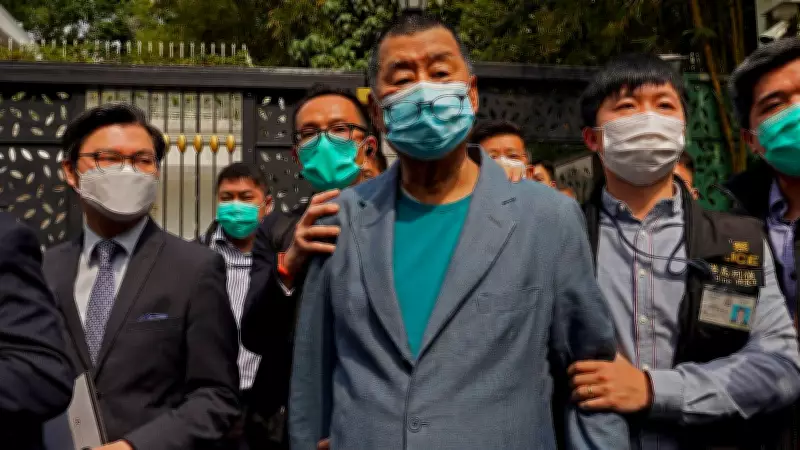
Jimmy Lai, the 78-year-old founder of the pro-democracy newspaper Apple Daily, was sentenced to 20 years in prison on February 9 under China's national security law for charges of sedition and colluding with foreign forces. This verdict, described by his son Sebastien Lai as "the total destruction of the Hong Kong legal system and the end of justice," represents the most severe punishment issued since the law was enacted in 2020 following mass pro-democracy protests.
Beijing's Firm Stance on National Security and Order
In response to the sentencing, Beijing and Chinese state media have strongly defended the action. An article in the Global Times asserted that the national security law has decisively moved Hong Kong from chaos to order and toward prosperity, framing the Lai case as proof of the law's legitimacy and compatibility with common law development. Additionally, China's State Council released a white paper titled 'HK's Efforts on Safeguarding China's National Security,' emphasizing the central government's holistic approach to national security and its jurisdiction over Hong Kong under the Constitution and Basic Law.
The clear message from these actions is that under President Xi Jinping, national security prioritizes order and adherence to the Communist Party line, overshadowing previous commitments to Hong Kong's unique status.

International Criticism and Domestic Silence in Hong Kong Media
While Jimmy Lai's sentencing has drawn significant international criticism, the reaction within Hong Kong has been notably muted. Once a beacon of freedom and critique, Hong Kong's media has largely remained silent on the issue, with some outlets even praising the verdict. This silence is unsurprising given the broader context: since the national security law was implemented, numerous pro-democracy leaders have been arrested and sentenced, and several pro-democracy parties have disbanded due to safety concerns.
The law has effectively eradicated space for criticism of the Chinese Communist Party or Xi Jinping. According to Reporters Without Borders, approximately 900 Hong Kong journalists have lost their jobs since the law came into force, accompanied by increased incidents of harassment and intimidation. This trend echoes past events, such as the 2015 kidnapping of Causeway Bay booksellers who published materials critical of Chinese leadership.
The Demise of 'One Country, Two Systems' and Hong Kong's Identity
Hong Kong's transfer to China on July 1, 1997, was governed by the Basic Law under the principle of One Country, Two Systems, which promised to preserve Hong Kong's free-market economy, civil liberties, media freedom, and judicial independence for 50 years. However, Jimmy Lai's sentencing effectively marks the end of this principle, as upheld by Deng Xiaoping, who once stated that Hong Kong's policies should remain unchanged for at least 50 years after the handover.
The national security law has attacked the core of Hong Kong's identity, as highlighted by Emily Feng in her book Let Only Red Flowers Bloom: Identity and Belonging in Xi Jinping's China. She argues that the 2019 protests were a pivotal moment over Hong Kong's identity, but the law's precepts now oppose the values that once separated Hong Kong from mainland China in spirit.
Today, the survival of Hong Kong appears contingent on its people accepting Xi Jinping's diktats, signaling a profound shift away from the autonomy envisioned decades ago.