History does not always announce itself with grand fanfare. Sometimes it erupts across oceans with bombs and warships. Sometimes it takes shape in crowded public squares, where ordinary people demand something better. Other times, it hides in election results, award ceremonies, or desperate rescues that save thousands from disaster. June 4 stands out as one of those dates, packed with moments that redirected the course of the world.
Looking at June 4 across the years reveals how often this day lands at critical crossroads: war and peace, freedom and oppression, moments when the world held its breath. The Dunkirk evacuation during World War II, the turning point at the Battle of Midway, the bloody crackdown at Tiananmen Square, and Poland's leap toward democracy all occurred on this single date.
1917: First Pulitzer Prizes Awarded
On June 4, 1917, the first Pulitzer Prizes were awarded. Now considered the gold standard for journalism and literature, the Pulitzer Prize originally stemmed from an idea in Hungarian-American newspaper publisher Joseph Pulitzer's will, aiming to honor outstanding reporting, writing, and public service. Over the decades, these awards have helped expose corruption, sparked shifts in public thought, and sustained journalism as a vital force. In an era of deepfake videos and misinformation, the principles behind that first Pulitzer—rewarding truth, courage, and clarity—remain profoundly relevant.

1940: The Miracle of Dunkirk
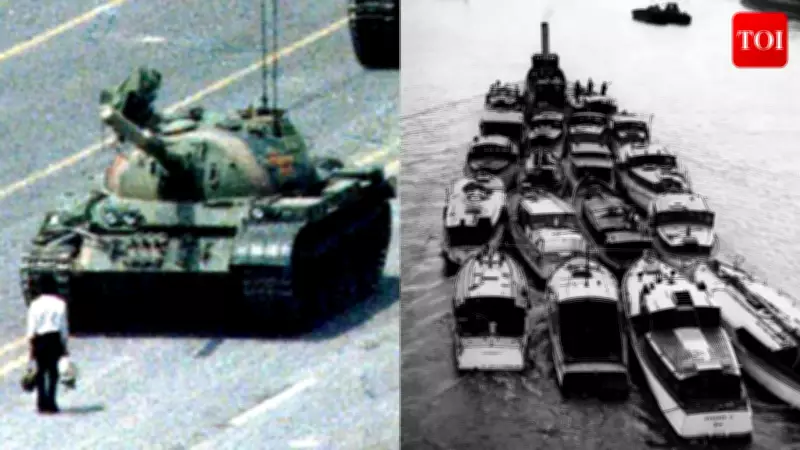
In spring 1940, Europe was in chaos. Nazi Germany's blitzkrieg swept through France so rapidly that hundreds of thousands of Allied troops—British, French, Belgian—became trapped on the beaches of Dunkirk. The situation appeared hopeless, with Britain fearing the loss of its entire army and potentially the nation itself. For nine frantic days, an improvised armada of navy ships, fishing boats, ferries, yachts, and civilian craft crossed the English Channel, rescuing 338,000 soldiers. On June 4, the evacuation, known as the "Miracle of Dunkirk," officially concluded. While not a military victory—most equipment was abandoned and Germany controlled Western Europe—Dunkirk preserved a fighting force that later helped win the war. Winston Churchill noted, "Wars are not won by evacuations." Yet Dunkirk became a symbol of courage and resilience, proving that grit can save the day even when the larger battle continues.
1942: Battle of Midway Turns the Tide
Just two years after Dunkirk, June 4 again proved pivotal, this time in the vast Pacific. The Japanese navy seemed unstoppable, six months after Pearl Harbor, with Midway as their next target. However, American codebreakers intercepted Japanese plans, allowing the U.S. Navy to set a trap. Over four furious days, the two forces clashed. By the end, four Japanese aircraft carriers—Akagi, Kaga, Soryu, and Hiryu—were sunk. The U.S. lost only one carrier, USS Yorktown, but the balance of power in the Pacific shifted permanently. Midway broke Japanese momentum and placed the U.S. on the offensive. Historians agree: if the U.S. had lost, the Allied position in the Pacific would have been drastically different. Instead, Midway marked the beginning of a long march toward victory.
1989: Tiananmen Square Crackdown
June 4, 1989, remains a dark and censored date in China. For weeks, peaceful protests by students, workers, and citizens in Beijing had captured global attention, demanding greater freedoms and an end to corruption. On the night of June 3 and into June 4, the Chinese military intervened. Tanks rolled into the city, soldiers moved in, and a brutal crackdown ensued, resulting in significant loss of life. Exact death tolls remain disputed, with estimates ranging from hundreds to potentially thousands. The iconic image of "Tank Man" standing alone before a column of tanks became a symbol worldwide. More than three decades later, that night is still referenced in discussions about freedom, censorship, and the cost of dissent.

1989: Poland Votes for Democracy
On the very same day as the Tiananmen crackdown, halfway across the world, Poland held its first partially free elections since the Communist era. The Solidarity movement, led by Lech Wałęsa and rooted in ordinary workers, challenged the regime. The results shocked the Communist authorities: Solidarity won almost every contested seat, shattering the myth of popular support for the government. Poland broke the dam. Communist governments across Eastern Europe fell within months. The Berlin Wall came down later that year, and the Soviet grip on the region never recovered. Many historians consider June 4 the true beginning of the end for Communism in Europe.
These events, spanning from 1917 to 1989, demonstrate how a single date can encapsulate moments of heroism, tragedy, and transformation. June 4 reminds us that history often unfolds in unexpected ways, leaving legacies that continue to shape our world.