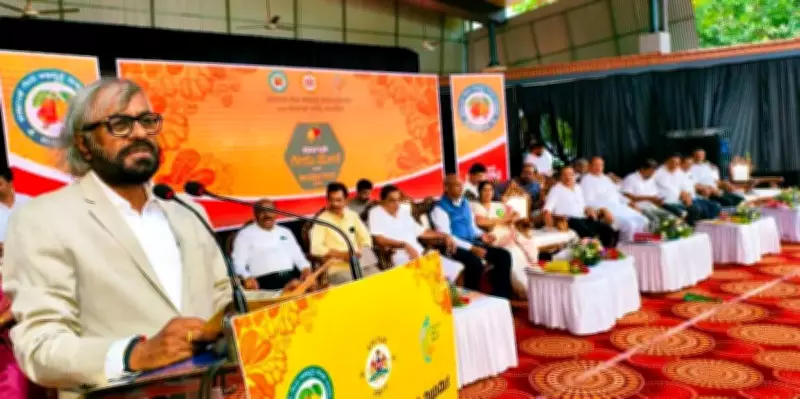
Mangaluru: Forest, Ecology and Environment Minister Eshwar Khandre stated on Sunday that the Karnataka government is making sincere efforts to relocate forest dwellers from areas inside forests across the state, including Kudremukh National Park, to reduce human-wildlife conflict and aid conservation.
Rehabilitation Efforts and Compensation
Speaking at the inauguration of a two-day cashew mela organized by the Karnataka State Cashew Development Corporation at Kadri Park, Khandre distributed cheques worth Rs 2.3 crore to five families from the Kudremukh forest region. The beneficiaries included families from Kerekatte, where two people were killed in elephant attacks a few months ago. All had voluntarily applied for rehabilitation outside forest areas.
“Around Rs 17 crore is currently available for rehabilitation, and within the next one month, all those who voluntarily decide to move out will be provided compensation,” he said.

Addressing Human-Elephant Conflict
Khandre emphasized that merely capturing elephants would not solve the rising conflict. “The government has initiated measures to expand and conserve forest areas by relocating people living inside forests,” he explained.
The minister noted that around 1,300 families once resided inside the Kudremukh region. Of these, 350 have been rehabilitated with compensation, while another 300 families have voluntarily applied for relocation. The process will be implemented in phases. The long-pending rehabilitation program has been restarted, subject to financial feasibility, and officials have been instructed to identify willing families and expedite relocation. An additional Rs 20 crore has been allocated.
Support for Wildlife Attack Victims
The government provides Rs 20 lakh compensation to families of those killed in wildlife attacks. In Kerekatte, two members from affected families have been given contractual jobs in the forest department on humanitarian grounds.
Enhanced Measures for Conflict Mitigation
Khandre said incidents of human-elephant conflict have increased. A dedicated Elephant Task Force has been sanctioned for the Dakshina Kannada district, with 25 personnel trained. Measures include the installation of railway barricades, ensuring food and water for wildlife inside forests, staff recruitment, and a command center.
Strict Implementation of Trekker Safety SOP
On trekkers' safety, he directed the strict implementation of the recently prepared Standard Operating Procedure (SOP). Trek passports released by the Kudremukh Wildlife Division, featuring destinations and QR codes, were distributed. Trekking guide handbooks and first-aid kits were handed over to nature guides. He also flagged off a Shola Safari vehicle and released a handbook for trekkers.