

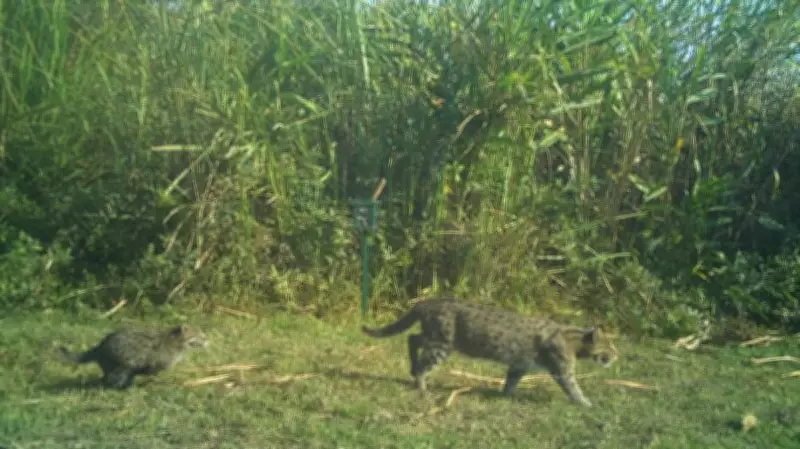
Kaziranga National Park Documents At Least 57 Fishing Cats in Historic First Population Assessment
In a landmark development for Indian wildlife conservation, Kaziranga National Park and Tiger Reserve in Assam has successfully completed its first-ever dedicated population assessment for the elusive fishing cat. The comprehensive survey, utilizing advanced camera trap technology and systematic field methodologies, has officially recorded a minimum of 57 individual fishing cats within the park's protected boundaries. However, wildlife biologists and park authorities have explicitly stated that this figure is "likely an undercount" of the actual population, suggesting the true number inhabiting the UNESCO World Heritage Site could be significantly higher.
A Critical Baseline for a Threatened Species
The fishing cat (Prionailurus viverrinus) is a remarkable medium-sized wild cat uniquely adapted to an aquatic lifestyle. It is one of the very few felid species in the world specialized for hunting in water, possessing partially webbed paws and a dense, water-resistant coat. This inaugural census in Kaziranga establishes a crucial scientific baseline for monitoring the species' status in one of its key Indian strongholds. The assessment's findings are vital for informing future conservation strategies and adaptive management plans for the park's diverse ecosystem.
Global Context of Decline and Local Significance
Globally, the fishing cat is confronting a severe conservation crisis. The species has vanished from substantial portions of its historical range, with documented extirpations and dramatic population declines reported across Southeast Asia. Notably, experts have recorded its disappearance from regions in Vietnam and the Indonesian island of Java, highlighting the intense pressure it faces. Primary threats driving this decline include rampant habitat loss and degradation of wetland ecosystems, direct hunting and retaliatory killing due to human-wildlife conflict, and poaching. Against this bleak international backdrop, the confirmed presence of a breeding population in Kaziranga underscores the park's immense importance as a sanctuary for this vulnerable species.

The census employed a rigorous protocol of camera traps strategically placed across the park's varied habitats, including its grasslands, wetlands, and forested areas. While the technology captured compelling visual evidence of the cats, experts caution that the solitary and secretive nature of the fishing cat makes absolute population counts exceptionally challenging. The declared count of 57 individuals represents a conservative minimum estimate. Factors such as the cats' extensive home ranges, nocturnal habits, and the vast, sometimes inaccessible terrain of Kaziranga mean many individuals likely evaded detection. This acknowledgment is a standard and responsible practice in wildlife biology, ensuring data integrity.
Implications for Conservation and Law Enforcement
This first assessment provides park managers with invaluable data to strengthen protection measures. Understanding the distribution and density of fishing cats helps in targeting anti-poaching patrols and mitigating specific threats like snaring or habitat encroachment. The success also reinforces the effectiveness of Indian wildlife protection laws and dedicated conservation efforts within protected areas. Moving forward, scientists recommend regular, periodic assessments to track population trends, study the impacts of climate change on wetland habitats, and assess the success of conservation interventions. The work in Kaziranga sets a precedent for similar surveys in other potential fishing cat habitats across India and South Asia.

In conclusion, the documentation of at least 57 fishing cats in Kaziranga is a significant and encouraging milestone. It transforms the species from an often-overlooked resident to a quantified component of the park's legendary biodiversity. While celebrating this success, the conservation community remains acutely aware of the ongoing threats, using this data as a powerful tool to secure a future for this fascinating aquatic predator within India's natural heritage.





