

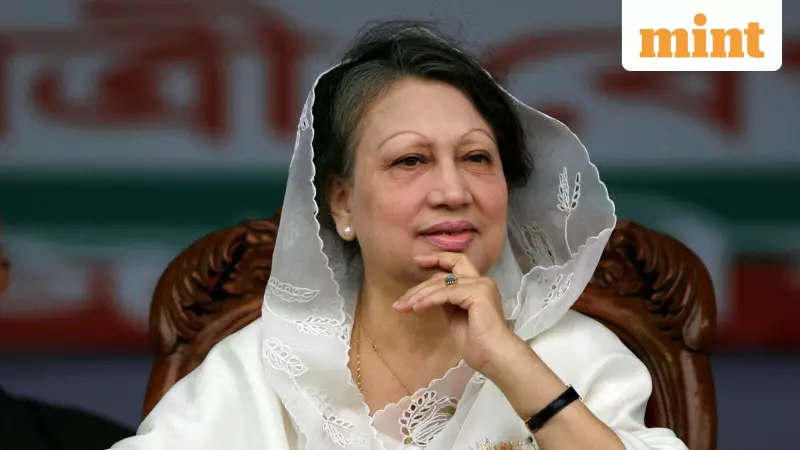
The political landscape of Bangladesh mourns as Khaleda Zia, the nation's first female prime minister and a towering opposition figure, passed away on 30 December. She was 80 years old. Her death has reignited public curiosity about her early life and connections to India, shaped by her pre-Partition birthplace.
Khaleda Zia's Indian Roots and Family History
Born as Khaleda Khanam Putul on 15 August 1945, her origins are deeply tied to the undivided Bengal. Her birthplace was Jalpaiguri, a city that is now a significant part of West Bengal in northern India. At the time of her birth, it belonged to the Bengal Province of British India.
Her family history further weaves a tapestry across the Bengal region. Her father, Iskandar Ali Majumder, hailed from Feni, which is now in Bangladesh's Chittagong Division. Her mother, Taiyaba Majumder, was born in Chandbari village, located in what is today the Uttar Dinajpur district of West Bengal, India. Following the Partition of 1947, her family relocated to Dinajpur, which later became part of independent Bangladesh.

The Final Health Battle: What Caused Khaleda Zia's Death?
Khaleda Zia's passing was the result of a prolonged and severe struggle with multiple health issues. Her final admission to Evercare Hospital in Dhaka occurred on 23 November after she experienced acute breathing difficulties stemming from a lung infection.
This condition rapidly deteriorated into pneumonia and subsequent respiratory failure, necessitating ventilator support. Compounding this was a long-standing and advanced case of liver cirrhosis. Her body was also grappling with diabetes, rheumatoid arthritis, kidney problems, and heart disease.
Zia had a history of cardiac issues, managed with a pacemaker and previously implanted heart stents. The severe chest infection placed immense strain on her already compromised heart. She had been undergoing medical treatment in the United Kingdom before returning to Bangladesh in May of this year.
Critical Condition and National Prayers
In the days leading to her death, her condition was described as extremely grave. BNP Secretary General Mirza Fakhrul Islam Alamgir had confirmed the critical state, stating the entire nation was praying for her recovery. A medical board member, Dr. Ziaul Haque, detailed that she was on life support and undergoing regular dialysis.
Her demise marks the end of an era in Bangladeshi politics, closing a chapter defined by her fierce rivalry with the Awami League and her unique personal history that bridges the modern borders of India and Bangladesh.






