

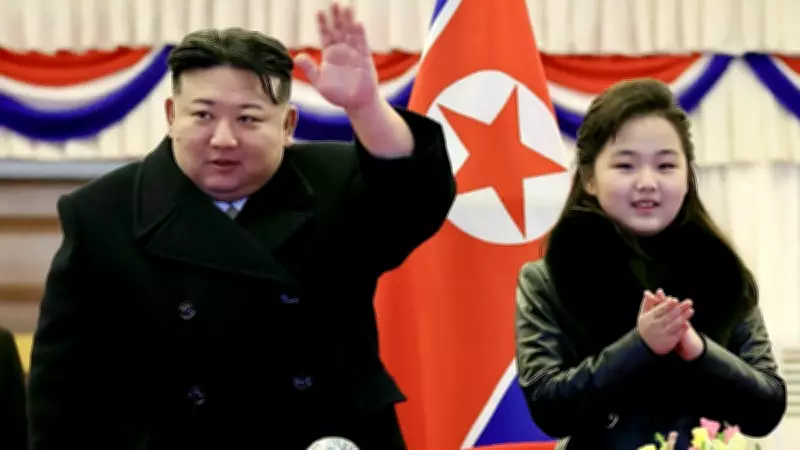
South Korean Intelligence Indicates Kim Jong-un's Daughter as Heir Apparent
In a significant development regarding North Korea's future leadership, South Korea's National Intelligence Service (NIS) has disclosed that Kim Jong-un's daughter is on the verge of being officially designated as the next leader of the reclusive state. This revelation, made on February 12, 2026, sheds light on the potential succession plans within the ruling Kim dynasty, which has governed North Korea for decades.
Details from the Spy Agency Report
The NIS, South Korea's premier spy agency, stated that preparations are underway to formally name Kim Jong-un's daughter as the successor. While specific details about her age or identity were not fully disclosed in the report, intelligence sources suggest she has been increasingly involved in state affairs and public appearances, signaling her grooming for leadership. This move aligns with historical patterns in North Korea, where leadership transitions have often been kept within the family lineage.
Analysts note that this potential designation could have profound implications for regional stability and international relations. North Korea's nuclear ambitions and diplomatic engagements might be influenced by the new leadership dynamics, especially if the succession process proceeds as indicated. The NIS report emphasizes that the formal announcement is expected in the near future, though no exact timeline has been provided.

Historical Context and Regional Reactions
North Korea has a long history of dynastic rule, with Kim Jong-un himself succeeding his father, Kim Jong-il, in 2011. The prospect of his daughter taking over continues this tradition, but it also raises questions about governance and policy continuity. South Korean officials have expressed cautious concern, highlighting the need for close monitoring of developments to assess potential impacts on inter-Korean relations and broader security in East Asia.
International observers are closely watching the situation, as any leadership change in North Korea could affect global efforts related to denuclearization and humanitarian issues. The NIS's report underscores the importance of intelligence-sharing among allies to prepare for possible scenarios. In response, neighboring countries and global powers are likely to adjust their diplomatic strategies accordingly.
Implications for Future Governance
If Kim Jong-un's daughter is indeed designated as the next leader, it would mark a significant moment in North Korean politics. Key areas to watch include:
- Military and Nuclear Policies: How her leadership might influence North Korea's stance on weapons development and international treaties.
- Economic Reforms: Potential shifts in domestic economic strategies and engagement with foreign markets.
- Diplomatic Relations: Changes in interactions with South Korea, the United States, China, and other nations.
Experts suggest that while the succession plan appears to be in motion, uncertainties remain regarding the timing and public acceptance within North Korea. The NIS continues to gather intelligence to provide updates as the situation evolves. This development highlights the ongoing challenges in understanding and predicting North Korea's internal affairs, given its secretive nature.






