Kolkata: Six flyers who have returned from Ebola-affected nations over the past week have been placed under home quarantine for 21 days, as advised by Kolkata airport authorities. State health department officials are conducting daily follow-ups to monitor whether any of the individuals have developed symptoms associated with the Ebola virus.
According to sources, the six passengers declared in their self-declaration forms that they had visited either the Democratic Republic of Congo (DRC) or Uganda in the weeks prior to arriving in Kolkata. They were subsequently introduced to state health department officials, who have mandated a three-week home quarantine period.
The health department, however, clarified that so far, no case of Ebola virus has been detected in the state or anywhere in the country.

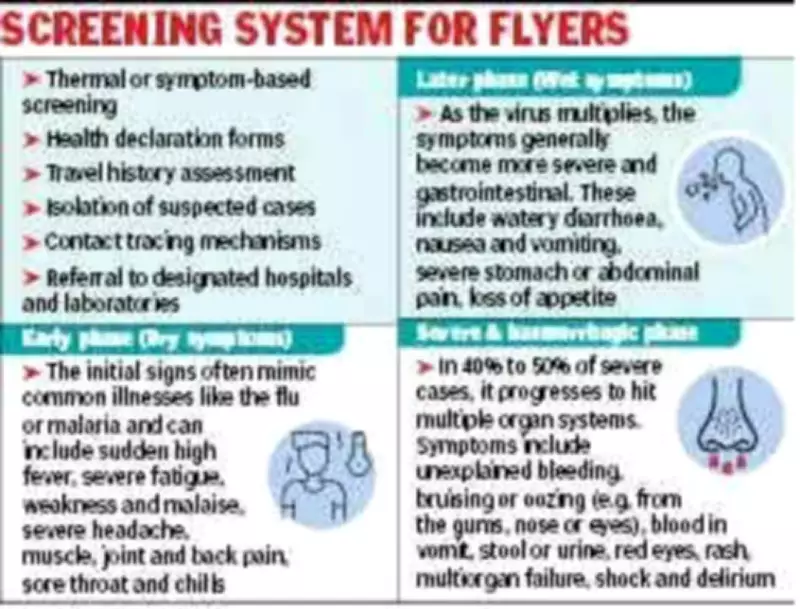
An airport official stated that the quarantine measures, reminiscent of those implemented during the COVID-19 pandemic, follow a Standard Operating Procedure (SOP) issued by the Union health ministry. The SOP aims to detect potential Ebola infections and prevent their spread.
The action was prompted by self-declarations made by passengers upon arrival and immigration checks regarding the countries they had recently visited.
“There are three categories of actions that have been recommended. If a person has visited DRC, Uganda, or South Sudan recently but believes they have not come into contact with an Ebola patient, they are to remain in home quarantine for three weeks, with the state health department following up on their health condition daily. In the second category, if a passenger suspects they have had direct or indirect contact with an Ebola case, they will be quarantined at the airport for three weeks. If, however, the individual shows symptoms of Ebola, they will be sent to the Infectious Diseases Hospital,” the official explained.
Kolkata does not have direct flights to any of these nations. However, passengers can reach the city via popular transit hubs such as Bangkok or Dubai.
Ebola symptoms typically appear suddenly, 2 to 21 days after exposure (averaging 8 to 10 days). The illness progresses in distinct phases, shifting from initial flu-like indicators to severe gastrointestinal distress and, in some cases, uncontrolled internal and external bleeding.
The Indian government has reviewed SOPs related to screening, quarantine, case management, and laboratory preparedness as part of its Ebola response. The National Institute of Virology (NIV) in Pune has been designated as a major testing centre for the virus.
Health officials emphasised that early reporting of symptoms is critical for timely medical intervention and can help prevent the spread of infection. “Early reporting can save lives and help prevent the spread of disease,” the ministry said in a statement.
About the Author
Tamaghna Banerjee is a reporter based in Kolkata, covering crime, aviation, human rights, and politics. He has a keen interest in human interest and rural reporting. He holds a postgraduate degree in journalism and mass communication and has a total of 14 years of experience in journalism.