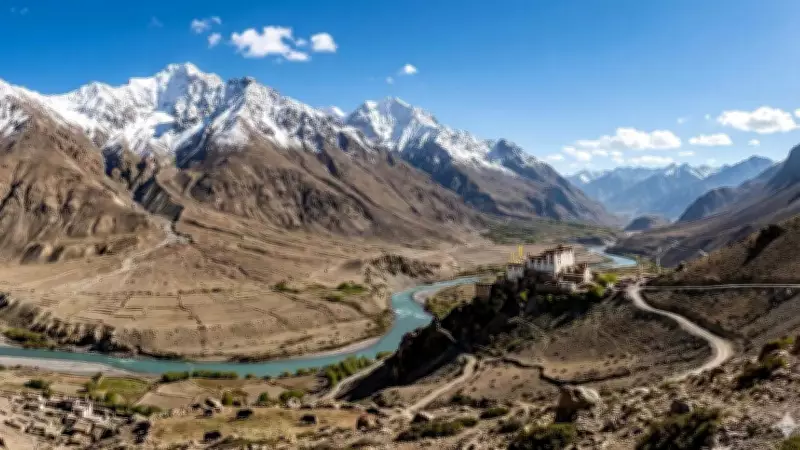
Ladakh, a high-altitude region surrounded by vast glaciers, suffers from a critical seasonal water gap that leaves villages parched when water is most needed. Despite abundant winter snow, the water remains frozen and inaccessible during the crucial spring sowing season. Climate change has exacerbated this paradox, making traditional glacial melt unpredictable and threatening agriculture.
Project Him Sarovar: A Strategic Response
To combat this, the Ladakh administration, supported by the Indian Army, has launched Project Him Sarovar. This initiative aims to construct 100 reservoirs to trap runoff, transforming runaway meltwater into a climate-resilient resource. By building these blue assets, Ladakh seeks to move beyond survival toward a sustainable, water-secure future.
The Seasonal Water Gap
According to a study titled "Climate Change-Induced Impact on Water Resource of Ladakh Cold Arid Region" published in ResearchGate, Ladakh's agricultural cycle depends on precise synchronization: glaciers must melt just as spring sowing begins. However, climate change has disrupted this relationship, causing early runoff in February or March, long before seeds are planted in May. Increased thermal stress also accelerates sublimation, where snow turns directly into vapor without becoming liquid water, reducing available meltwater even after heavy snowfall.

The June Drought
The most critical period is the June gap, a period of acute physiological drought when the agrarian economy needs moisture most. Glacial melt now occurs too early, and deeper glaciers do not release water until late July, leaving June as a dead zone. Traditional khuls (irrigation channels) remain dry, threatening barley and pea cultivation.
Capturing Runaway Meltwater
Project Him Sarovar introduces a revolutionary approach by constructing 100 strategic reservoirs that act as a savings account for runaway meltwater. These blue and green assets trap early spring runoff, allowing a delayed release during the June gap. This engineering solution ensures that irrigation channels flow when the sun is highest, closing the seasonal gap and providing hope for Ladakh's farmers.
With a 72% deficit in recent winter snowfall in Leh, as reported by the administration, the region can no longer rely on natural cycles. Project Him Sarovar represents a shift from waiting for nature to actively securing water resources, turning a frozen wasteland into a sustainable lifeline for this frontier region.