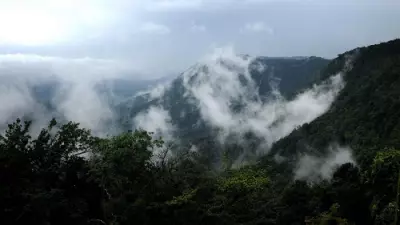
The Lipulekh pass, a high-altitude Himalayan pass, continues to be a flashpoint in the enduring India-Nepal border dispute, which now spans over 210 years. The disagreement traces its origins to the Sugauli Treaty signed in 1816 between British India and Nepal, following the conclusion of the Anglo-Nepal War (1814-1816). This treaty delineated the boundaries between the two territories, but ambiguities in its wording and subsequent interpretations have led to persistent tensions.
Historical Background of the Sugauli Treaty
The Sugauli Treaty was signed on March 4, 1816, after the British East India Company's victory over Nepal. The treaty ceded significant Nepalese territories to British India, including Sikkim, Darjeeling, and the areas west of the Kali River. However, the exact demarcation of the border, particularly in the remote mountainous regions, remained vague. The Lipulekh pass, located in the Uttarakhand region near the tri-junction of India, Nepal, and China, became a point of contention. Nepal claims that the treaty placed the pass within its territory, while India asserts that it falls on the Indian side.
Geopolitical Significance of Lipulekh
Lipulekh is not just a geographical feature; it holds strategic and religious importance. It is a crucial route for the Kailash Mansarovar Yatra, a pilgrimage to Mount Kailash and Lake Mansarovar in Tibet, which is sacred to Hindus, Buddhists, and Jains. The pass provides a shorter and more accessible path for pilgrims from India. Additionally, its location near the border with China adds a layer of geopolitical sensitivity, as it lies close to the Line of Actual Control between India and China.

Escalation of the Dispute
In recent years, the dispute has intensified. In 2020, India inaugurated a new road connecting the Lipulekh pass to the Dharchula area in Uttarakhand, which Nepal protested, claiming it violated previous agreements. Nepal responded by updating its official maps to include the areas of Lipulekh, Kalapani, and Limpiyadhura as part of its territory. This move was met with strong opposition from India, which maintains that these areas are integral to its sovereign territory.
Diplomatic Efforts and Stalemate
Both nations have engaged in multiple rounds of bilateral talks to resolve the issue, but a breakthrough remains elusive. The dispute has become a matter of national pride on both sides, with domestic political pressures complicating negotiations. The Lipulekh pass continues to symbolize the broader challenges in India-Nepal relations, which have historically been close but are occasionally strained by border issues.
Current Status and Future Outlook
As of June 2026, the Lipulekh pass remains a contested region. The Indian government continues to assert its sovereignty and has deployed security forces in the area. Nepal, on the other hand, has taken the matter to international forums and maintains its territorial claim. The dispute over Lipulekh is a reminder of the colonial-era treaties that continue to shape modern boundaries, and its resolution will require sustained diplomatic engagement and mutual compromise. The pass's significance for pilgrimage and security ensures that it will remain a focal point of bilateral relations for the foreseeable future.