

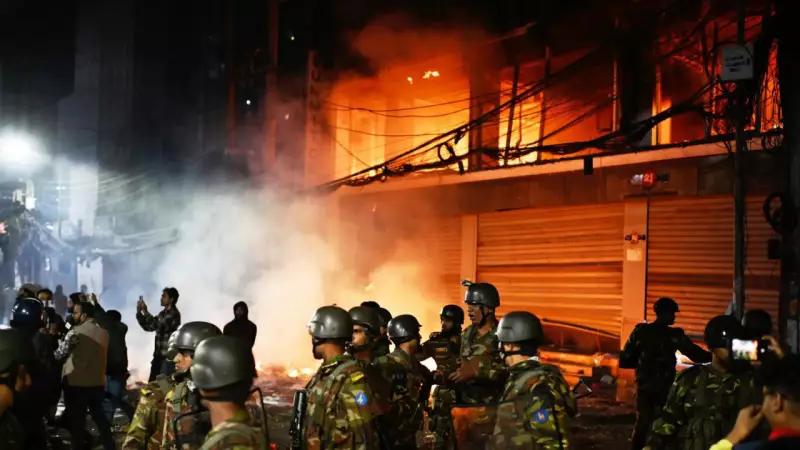
Tensions in Bangladesh have reached a new peak with a fresh incident of lethal violence in the capital. On Wednesday evening, a man lost his life after assailants targeted him with a crude bomb thrown from a flyover in Dhaka's busy Moghbazar area.
Details of the Moghbazar Bomb Attack
The victim, identified as Saiful, was having tea at a roadside stall when the explosive device was hurled from the flyover above. The incident occurred around 7 pm, as confirmed by Md Mohiuddin, the inspector (operations) of Hatirjheel Police Station, in a statement to The Daily Star. The attack resulted in Saiful's immediate death, marking another grim chapter in the nation's ongoing turmoil.
Roots of the Widespread Unrest
This violent episode is part of a larger wave of instability gripping the country. The unrest was triggered by the death of key student activist Sharif Osman Hadi. Hadi, a prominent figure in the anti-government protests that led to the toppling of Sheikh Hasina's government last year, succumbed to injuries in Singapore following an assassination attempt in Dhaka.

His death sparked massive protests and outcry across the South Asian nation. Interim leader Muhammad Yunus vowed justice, promising "no leniency" for those responsible for Hadi's killing.
Escalating Tensions and Communal Violence
The situation deteriorated further last week with a horrific incident of communal violence. Dipu Chandra Das, a Hindu youth from Bangladesh's minority community, was lynched by a mob in Mymensingh over alleged blasphemy. Shockingly, his body was subsequently set on fire.
Das's brutal killing ignited widespread protests. Factory workers, students, and rights groups took to the streets in Dhaka and other parts of Bangladesh, demanding justice and an end to mob violence. Notably, the mob attack on Das coincided with the period following the death of radical right-wing cultural group Inqilab Mancha leader, Sharif Osman Hadi.
The confluence of these events—the political assassination of a key activist, a brutal communal lynching, and now a random bomb attack in the capital—paints a picture of a nation grappling with deep-seated political and social fractures. The authorities face mounting pressure to restore order and deliver on promises of justice.






