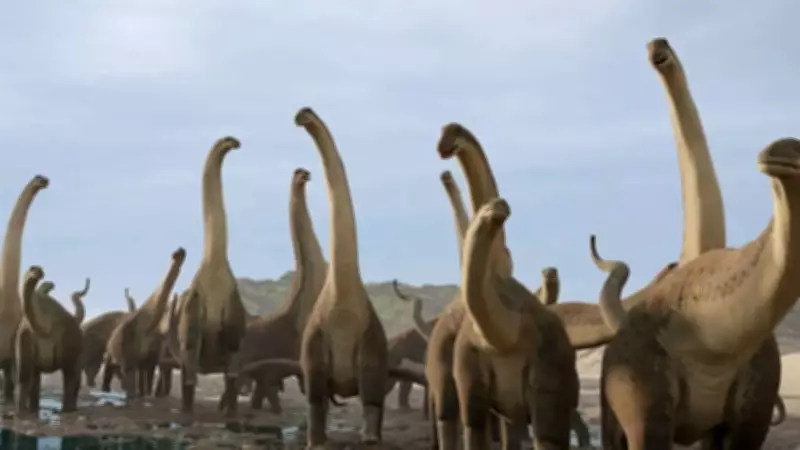
For decades, one of the most enduring questions in paleontology has been: How did dinosaurs get so big? A new discovery in Thailand may finally provide some answers. Researchers have unearthed a massive new dinosaur species, Nagatitan chaiyaphumensis, which is officially the largest dinosaur ever found in Southeast Asia. According to National Geographic, this giant measured nearly 90 feet in length and weighed as much as nine elephants. Its immense size is not only remarkable but also offers clues about what triggered the rise of gigantic plant-eating dinosaurs millions of years ago.
Discovery of the Giant
The story began in 2016 when a local man named Thanom Luangnan spotted unusual rocks beside a pond in Chaiyaphum Province. Those rocks turned out to be dinosaur bones, and they were enormous. Over several years, scientists excavated vertebrae, ribs, parts of the pelvis, and an enormous leg bone from 113-million-year-old rock. One leg bone measured 1.78 meters long, nearly the height of an average adult. The dinosaur itself stretched about 27 meters from head to tail.
The name Nagatitan chaiyaphumensis combines mythology and geography: “Naga” from regional serpent legends, “Titan” from Greek mythology, and “chaiyaphumensis” referring to the province where it was found. In a journal article, scientists classified Nagatitan as a somphospondylan, a distant cousin of the famous titanosaur giants that once roamed South America and Asia.

Why Did Dinosaurs Become So Gigantic?
When Nagatitan lived, Earth was in a greenhouse phase with warmer temperatures, high CO2 levels, and Southeast Asia near the equator. The landscape was open woodland and savanna filled with ferns and conifers. This environment was a paradise for large plant-eaters, offering abundant space and food. Like modern elephants shaping their environment, giant sauropods could wander freely and eat continuously, keeping the landscape open.
Paleontologist Pedro Mocho told National Geographic, “This is the most complete sauropod we’ve ever found in the Khok Kruat rocks.” Typically, Southeast Asian dinosaur finds consist of scattered bones, so this discovery fills significant gaps in the fossil record.
Multiple Origins of Gigantism
Another surprising finding is that enormous size evolved multiple times in dinosaurs. Giant sauropods like Nagatitan appeared on different continents, evolving separately more than 30 times. Nagatitan lived at the beginning of a period when Asian sauropods began to grow seriously large. Later relatives, such as Ruyangosaurus in China, reached even heavier weights, possibly up to 60 tonnes. Studying Nagatitan helps scientists track the evolutionary path of these giants across ancient Asia.
Surviving the Heat
How did these massive animals cope with high temperatures? Sauropods had several adaptations: long necks increased surface area for heat loss, and their light, air-filled bones helped with cooling and made supporting their weight easier.
This discovery is particularly significant because Southeast Asia has yielded far fewer dinosaur fossils than regions like North America or China. Finds like Nagatitan are rewriting the story, showing that the age of titans extended further across the globe than previously thought.