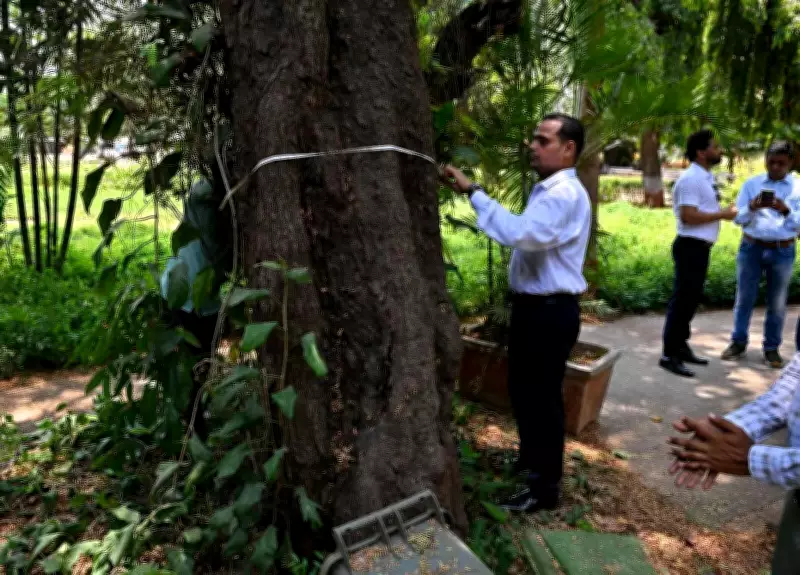
Mumbai has launched its first tree census in nearly eight years, with 64 botanist teams deployed across the city to document every tree meeting specific scientific criteria. The exercise, which began in February, is expected to take two years to complete. Surveyors are meticulously measuring tree height, girth, and canopy spread, using an app called Treecotech to standardize data collection.
Scientific Criteria for Inclusion
Only trees with a minimum girth of 3 meters at chest height or a height of at least 2.5 meters are included in the census. Surveyors physically record girth, canopy spread, height, species name, health condition, ownership, balance, mechanical damage, and geographic coordinates via a GIS-enabled app. The process takes 2-3 minutes per tree. Large trees will also be assigned QR codes and unique identification numbers.
Coverage and Challenges
The census covers not only public spaces like gardens and parks but also private properties, including housing societies, institutional campuses, defence zones, and airport premises. Dense urban neighbourhoods pose challenges, especially in private societies and restricted establishments where permissions take time. Surveyors carry a letter from the BMC garden department requesting cooperation. Defence land, airport premises, and gated residential compounds are among the hardest to access.

Ecological Patterns and Historical Insights
Early findings reveal striking ecological patterns. In Parsi colonies, surveyors have found a concentration of uncommon species like baobab trees and branching palms. This is attributed to the community's historical trade connections, with Parsis bringing saplings from overseas. Residents in these areas are known for strong resistance to tree cutting, making such neighbourhoods rich in unique tree varieties.
Importance of the Census
Jitendra Pardeshi, BMC’s superintendent of gardens, emphasizes that the census is crucial for understanding Mumbai’s changing urban ecology. The data will help map tree diversity and inform long-term planning. Ecologist Anand Pendharkar of Sprouts Environment Trust stresses the importance of physical verification by experts for accurate species classification. He recommends making the tree census a continuously monitored public exercise rather than a one-time count.
Recommendations for Participatory Approach
Pendharkar suggests encouraging institutions and private establishments to upload tree data onto a central platform for independent verification. He also calls for greater scrutiny of exotic species, noting that eucalyptus adversely affects soil and surrounding flora, and that ornamental trees like gulmohar should be gradually replaced with native species. Involving botany colleges, citizen groups, and local communities could make the exercise more participatory and foster public engagement with urban ecology.
As surveyors continue their work in Dadar's Pramod Mahajan Garden, commuters rush by, largely unaware of the extensive effort underway to document the city's green cover.