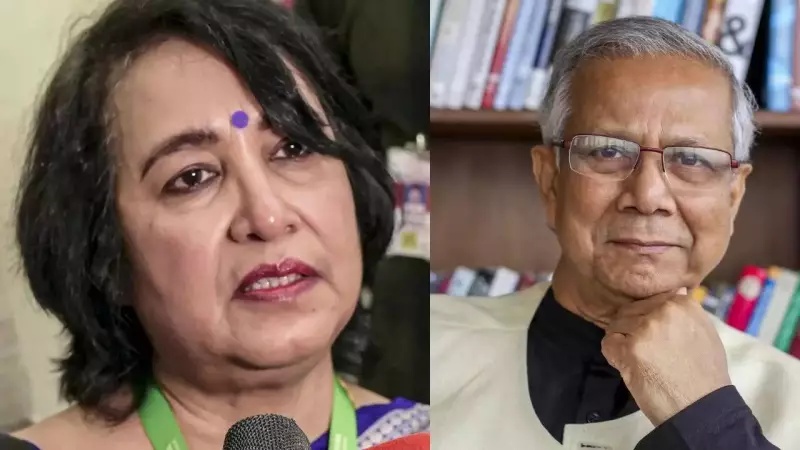
In a sharp critique from exile, Bangladeshi-Swedish writer Taslima Nasrin has launched a scathing attack on Nobel laureate Muhammad Yunus, who currently heads Bangladesh's interim government. Nasrin alleged that Yunus has thrown his support behind "fundamentalist" forces that she claims are now effectively controlling the nation.
Accusations of Supporting Extremism
Speaking at an event in Thiruvananthapuram, Kerala, on Friday, Nasrin did not mince her words. "The fundamentalists are in power and Dr Yunus is supporting them," she stated. Expressing deep concern for the country's secular fabric, she questioned how Bangladesh could be restored to the secular ideals for which it fought a liberation war against Pakistan in 1971.
Nasrin painted a grim picture of the current situation, asserting that the nation is now deeply divided. She accused Muslim extremists of killing and persecuting religious minority communities, a trend she insists must be halted immediately. Her comments come against a backdrop of multiple incidents targeting Hindus since the fall of Sheikh Hasina's Awami League government in August 2024 and the subsequent takeover by the caretaker administration.

Government Denial and a Writer's Warning
The Yunus-led interim administration has repeatedly denied that minorities are under any specific threat. Officials have stressed that not every violent incident is communally motivated, seeking to distance the government from allegations of targeted violence.
Nasrin, however, firmly rejected this official stance. She described the situation as "very bad for Hindus in Bangladesh" and accused Yunus of failing to take action against what she termed "the killers, the fundamentalists and jihadis." She connected the present crisis to the past, recalling her own traumatic exile.
A Personal History of Persecution
The author was forced to flee Bangladesh in 1994 after the publication of her controversial novel Lajja. She told the audience that when religious fanatics threatened her life and issued fatwas against her, the government of that time took no steps against them. "Instead, they issued an arrest warrant against me," Nasrin recounted.
She argued that if the authorities had acted decisively against fanatics and jihadists back then, Bangladesh would not find itself in such a dire state today. "The government used religion for political interests and to stay in power as long as possible," she alleged, drawing a direct line from past inaction to present turmoil.
A Plea for a Secular Future
Looking ahead, Nasrin expressed a cautious hope for Bangladesh's next chapter. She emphasized that meaningful change can only occur if a "pro-secular party" wins power through a free and fair election. The next general election in India's eastern neighbour is scheduled for February 12.
Her powerful remarks from Kerala have reignited a critical debate about the direction of Bangladesh under its interim leadership, the safety of its minority communities, and the enduring struggle for its secular founding principles.