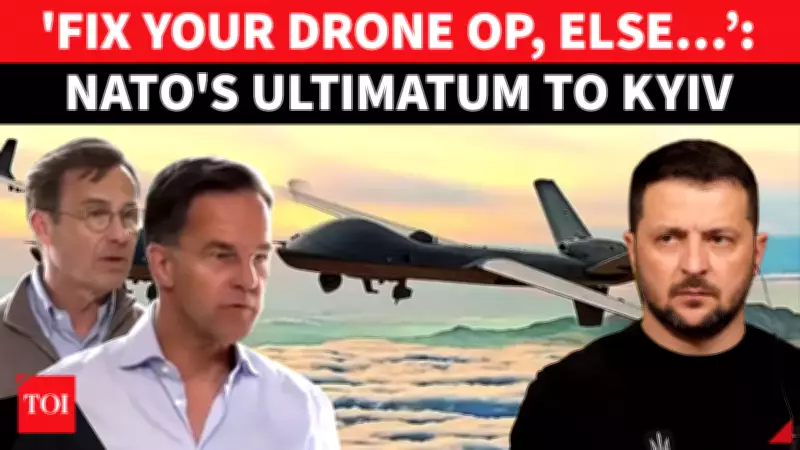
NATO has issued a chilling warning amid the escalating Russia-Ukraine war after Ukrainian drones repeatedly entered NATO airspace during attacks on Russian targets. Swedish Prime Minister Ulf Kristersson said NATO allies should help Ukraine “direct” its drone strikes “in the right directions,” while NATO chief Mark Rutte blamed Russian jamming and dismissed Moscow’s accusations against Baltic states as “totally ridiculous.” The tensions come after a NATO fighter jet reportedly shot down a Ukrainian drone over Estonia, raising fears that Kyiv’s expanding long-range drone campaign could spark a dangerous escalation involving NATO territory.
Background of the Crisis
The incident marks a significant deterioration in relations between NATO and Ukraine, as the alliance has grown increasingly concerned about the risks of being drawn into a direct conflict with Russia. Ukrainian forces have been using long-range drones to strike deep inside Russian territory, but some of these drones have strayed into NATO airspace, prompting alarm among member states. The downing of a Ukrainian drone over Estonia by a NATO fighter jet underscores the seriousness of the situation.
Swedish PM's Warning
Swedish Prime Minister Ulf Kristersson, whose country recently joined NATO, emphasized the need for Ukraine to exercise greater caution. “We must help Ukraine direct its drone strikes in the right directions to avoid any unintended consequences,” Kristersson stated. He called for enhanced coordination between NATO and Ukrainian forces to prevent future incursions.

NATO Chief's Response
NATO Secretary General Mark Rutte placed the blame on Russian electronic warfare, stating that Russian jamming systems were causing Ukrainian drones to lose their navigation and drift into allied airspace. He dismissed Moscow’s accusations that Baltic states were complicit in the drone attacks as “totally ridiculous.” Rutte reaffirmed NATO’s commitment to defending its airspace while avoiding direct confrontation with Russia.
Escalation Risks
The incident has heightened fears that the conflict could spill over into NATO territory, potentially triggering Article 5, the alliance’s collective defense clause. Analysts warn that repeated drone incursions could lead to a miscalculation, with NATO forces potentially engaging Russian or Ukrainian aircraft. The situation remains fluid, with both sides urged to exercise restraint.
International Reactions
Ukraine has not officially commented on the incident, but Kyiv has previously stated that it takes all necessary precautions to avoid targeting NATO territory. Russia, meanwhile, has accused NATO of aiding Ukraine’s drone campaign, a charge the alliance denies. The United States has called for calm and urged all parties to de-escalate the situation.
As the war continues, the drone incursions represent a new and dangerous phase in the conflict, testing the limits of NATO’s patience and Ukraine’s strategic autonomy. The coming weeks will be crucial in determining whether the alliance can maintain its support for Kyiv while preventing a broader war.