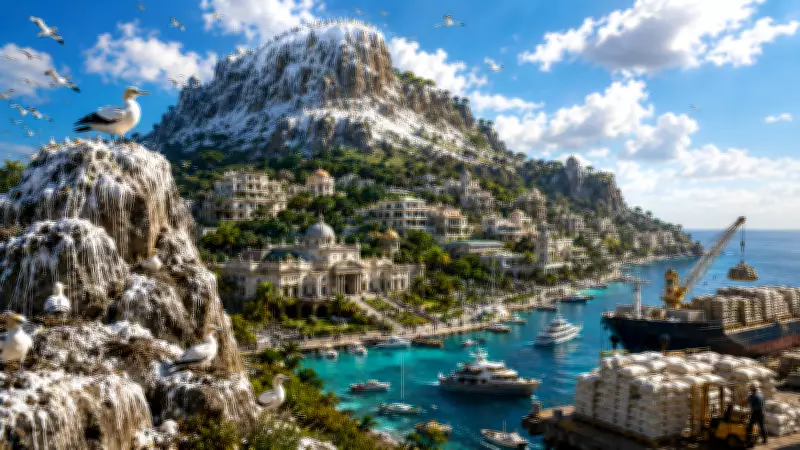
From the air, Nauru hardly looks like the sort of place that would appear in conversations about wealth. It is a small Pacific island, just 21 square kilometres in size, isolated from major markets and home to a population smaller than many suburban neighbourhoods. Yet for a period during the late twentieth century, it ranked among the wealthiest nations on earth on a per-person basis. That prosperity came from an unlikely source buried beneath the ground: phosphate formed over centuries from seabird deposits. The money arrived quickly. Keeping it proved far more difficult. Since then, Nauru has moved through repeated cycles of boom, decline and reinvention, turning to an unusual mix of industries, government agreements and experimental ventures in an effort to sustain itself.
An island shaped by bird droppings and later reshaped by empire
According to Australian Broadcasting Corporation, Nauru's modern economic story began long before independence. Beneath much of the island lay rich phosphate reserves, created over thousands of years through the accumulation and transformation of bird droppings. Once the deposits were discovered and mined on a large scale, they became immensely valuable to global agriculture because phosphate is a key ingredient in fertiliser. For a small country with few natural advantages, the revenue was transformative. During the 1970s, phosphate exports generated extraordinary income. The government accumulated assets overseas, invested in property and established funds intended to secure future prosperity. At the height of the boom, Nauru became a symbol of sudden resource wealth, achieving living standards that appeared remarkable for such a remote island nation.
The prosperity extended beyond its shores. Nauru purchased high-profile assets abroad, including commercial real estate in Australia. For many observers at the time, the country appeared to have secured a comfortable future despite its limited size.

Phosphate wealth and its uneven effects
The tiny Pacific nation of Nauru, a coral atoll spanning just 21 square kilometres and home to around 7,500 people, was once among the richest countries in the world. Its extraordinary wealth came from exporting phosphate deposits formed over centuries from accumulated seabird droppings. However, as those phosphate reserves dwindled and years of corruption, poor financial decisions, and economic mismanagement took their toll, the island's fortunes declined dramatically, leaving the nation facing severe financial challenges, according to World Bank reports. For a period after independence, Nauru’s phosphate reserves generated a level of income that was unusual for a place of its size. The population was small, the revenue large, and the imbalance between the two created an unusual economic moment.
What followed was less tidy. Investments were made in ways that did not always hold their value. Wealth that had come quickly also moved quickly. There is a well-worn economic phrase often used to describe resource-dependent economies, and it fits here without needing emphasis. The broader point is simpler: the windfall did not translate into long-term stability.
When abundance became a problem
The phosphate wealth carried a contradiction. The deposits that generated so much income were finite. Extraction continued at a rapid pace and the island's economy became heavily dependent on a single resource. As reserves declined and prices fluctuated, the foundations of that prosperity became increasingly fragile. The environmental cost also became impossible to ignore. Large sections of Nauru's interior were left scarred by decades of mining. Jagged limestone formations and excavated land replaced what had once been productive terrain. Much of the central part of the island became unsuitable for agriculture, housing or other forms of development. What had delivered prosperity was simultaneously limiting future options.

When phosphate wealth faded, risky investments filled the gap
As phosphate earnings weakened, Nauru searched for alternative ways to generate revenue. Some of those efforts became famous for the wrong reasons. Among the most unusual was the government's involvement in a London stage production during the early 1990s. The musical, centred on Leonardo da Vinci and an imagined romance involving the Mona Lisa, attracted attention largely because of its financial backers. The production failed to find an audience and closed quickly, leaving substantial losses behind. The theatre venture became a shorthand example of a broader problem. A series of investments failed to deliver the returns that had been expected, while concerns emerged over financial management and governance. Assets accumulated during the boom years were gradually sold off as economic pressures intensified. By the beginning of the new century, the contrast with Nauru's earlier prosperity was striking. Government finances were strained and debt levels had become a serious concern.
How the ocean became one of Nauru's most valuable assets
While much attention focused on Australia's offshore processing arrangements, another source of revenue was developing further out at sea. Nauru controls an exclusive economic zone that stretches far beyond its coastline. These waters contain valuable tuna stocks that are sought after by international fishing fleets. Licensing agreements have become an increasingly important part of the country's finances. For many Pacific nations, the ocean represents a far larger economic asset than the land itself, and Nauru has benefited from that reality. The income generated through fishing rights has helped diversify government revenue, even if the economy remains dependent on a relatively small number of sectors.
New agreements and fresh opportunities
Recent years have brought another round of financial arrangements involving Australia. Canberra has committed significant funding through security and cooperation agreements, alongside separate payments linked to the resettlement of non-citizens affected by legal decisions within Australia. The scale of the commitments is considerable when measured against Nauru's population and overall economy. The island nation has also revived efforts to market citizenship through a new passport programme, presenting it as a way to finance adaptation projects connected to climate change and rising sea levels.
Elsewhere, Nauru has positioned itself among the Pacific governments interested in the future potential of deep-sea mining. Supporters view seabed minerals as a possible economic opportunity, while critics argue that the environmental consequences remain poorly understood. The debate reflects a familiar dilemma. Nauru continues to look for resources that can provide long-term prosperity without repeating the mistakes associated with phosphate extraction.
A country still balancing its future
Despite improved government finances, understanding everyday life in Nauru is not always straightforward. Reporting from the island remains relatively limited, and foreign journalists face practical barriers that make regular coverage difficult. That leaves unanswered questions about how national income is distributed and how much economic growth is being felt across ordinary households.
What is clear is that Nauru's history defies simple explanations. It is neither a straightforward success story nor a cautionary tale with a neat ending. The island has repeatedly reinvented itself as circumstances changed, moving from phosphate wealth to financial hardship and then towards a new collection of revenue streams tied to diplomacy, fisheries and international agreements.