

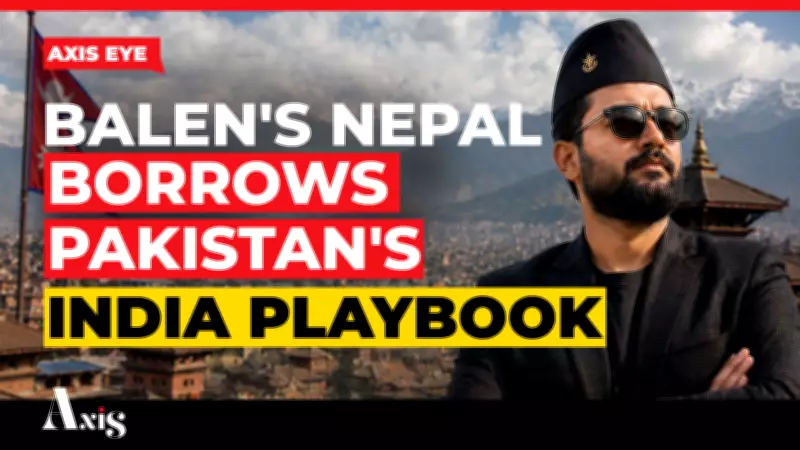
Nepal's new Prime Minister, Balen Shah, has triggered a significant political and diplomatic storm following his explosive remarks regarding the India-Nepal border dispute. The young leader's statements have raised critical questions about the future of bilateral relations between the two neighboring countries. Is Nepal genuinely altering its foreign policy trajectory, or is Balen Shah simply employing nationalist rhetoric to consolidate his domestic standing?
The Context of Balen Shah's Remarks
Balen Shah, the youngest Prime Minister in Nepal's history, has challenged long-standing diplomatic norms by taking a firm stance on the border issue. His comments have been interpreted by many as crossing a red line that New Delhi traditionally expects its neighbors to respect. This development comes amid growing geopolitical complexities in South Asia, where both Pakistan and China play influential roles.
Pakistan and China Factors
Observers note that Balen Shah's assertive posture may be influenced by external factors, particularly the strategic interests of Pakistan and China. China, as Nepal's northern neighbor and a major investor, has deepened its footprint in the region through infrastructure projects and economic partnerships. Pakistan, meanwhile, has historically sought to leverage anti-India sentiments in Nepal to gain diplomatic leverage. These dynamics could be encouraging Kathmandu to adopt a more confrontational approach toward India.

Domestic Political Calculations
At home, Balen Shah faces the challenge of uniting a fragmented political landscape. By taking a strong nationalist stance, he may be aiming to project strength and divert attention from internal issues such as economic instability and governance challenges. The border dispute, a deeply emotional issue for many Nepalis, provides a convenient rallying point.
Implications for India-Nepal Relations
The remarks have strained the traditionally close ties between India and Nepal. India has historically been Nepal's largest trade partner and a key source of development assistance. However, recent years have seen a shift in Nepal's foreign policy, with Kathmandu seeking to balance its relations with both India and China. Balen Shah's statements could further complicate this balancing act.
Is Nepal Changing Its Foreign Policy?
While it is too early to conclude that Nepal is fundamentally altering its foreign policy, the signals are concerning for New Delhi. If Balen Shah continues to push the border issue aggressively, it may lead to a prolonged diplomatic standoff. However, some analysts argue that his rhetoric is primarily aimed at domestic consumption and will not translate into concrete policy changes.
Conclusion
The question remains whether Kathmandu is merely negotiating harder with India or adopting a playbook that uncomfortably mirrors the strategies of other regional actors. As the situation evolves, both India and Nepal will need to navigate this delicate phase with caution to preserve their longstanding partnership. The involvement of Pakistan and China adds an extra layer of complexity, making it essential for all parties to engage in constructive dialogue.






