

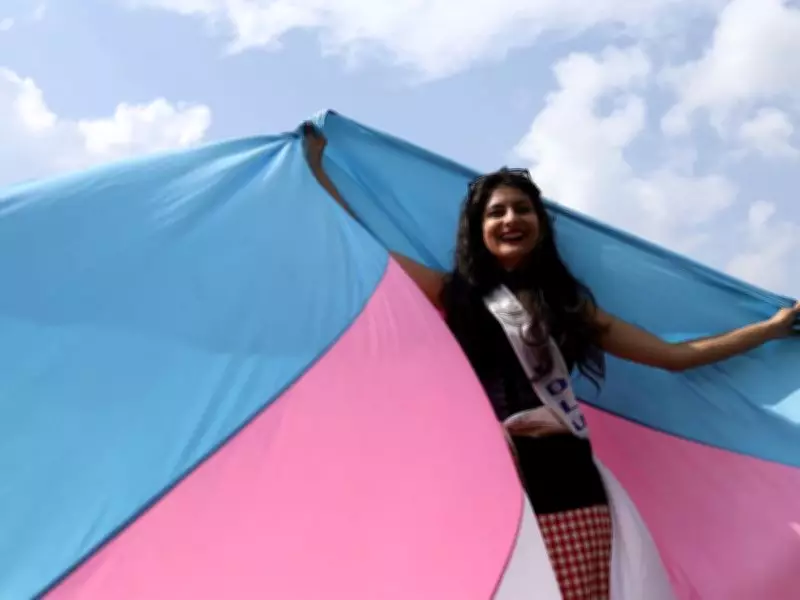
Hundreds of members of the LGBTQIA+ community took to the streets of Nepal's capital, Kathmandu, for the annual Pride parade, celebrating the renaming of a ministry that now includes the term 'sexual minorities' in its title. This marks a significant milestone following the election of Nepal's first transgender lawmaker and the government's latest recognition through the ministry's new name.
First Pride Parade Under New Government
The annual Pride parade, the first since the formation of the new government under Balendra Shah after the Gen-Z protest, celebrated the establishment of the Ministry of Women, Children, Gender and Sexual Minorities and Social Security. This is the first time Nepal has formed a department exclusively for sexual and gender minorities.
Parakram Rana, a digital media influencer from the sexual minorities group, expressed excitement: 'I am so excited and happy about this as it was a long-pending ministry that we needed, and Bhumika Shrestha (the Member of Parliament from the LGBTIQ+ community) coming as one of the members of parliament; she's definitely going to do a lot, I have so much faith.'

Rana added: 'We've got a ministry, I think so much is needed to be done; we need same-sex marriage, we need transgender rights, a lot of trans people require a lot of basic rights, and I feel with having Bhumika Shrestha as an MP – the transgender vocal voices – it's going to make a huge difference. So we are very excited, it is such a good year, a good time of the year in Nepal, we are all celebrating, happy and excited about what the future holds.'
Demands for Equal Rights
Despite the milestone set by the new government with a super majority, the minorities, while dancing and playing music, chanted slogans demanding equal rights from the government as well as from society. Sanskriti Pandey, another attendee of the parade, voiced cautious optimism: 'The question remains whether it will be tokenised or not; is it going to be just for the name or actually work. I have some hope, but I am not going to say that I have the best hope out there, but I think there is going to be a gradual change. I hope it's not just a tokenistic way but a meaningful participation.'
Ongoing Struggles for Legal Recognition
Pride Day specifically refers to the day on which the Pride Parade is held. While the Pride Parade is a public rally and celebration, Pride Day marks the occasion on which it takes place. In Nepal, Pride Day is observed on the second Saturday of June. The entire month of June, meanwhile, is recognised globally as Pride Month.
The sexual minorities have continued to demand the formal legalisation of same-sex marriage and the issue of adoption of children. The newly promulgated constitution of Nepal in September 2015 has a special provision for sexual minorities, but the group has been demanding its complete implementation.
Citizenship and Gender Recognition Issues
Nepal's marginalised sexual and gender minority communities have long demanded the right to obtain citizenship certificates with 'Others' listed as their gender. However, ambiguities in the existing citizenship laws and regulations have created significant obstacles to securing such documentation. Current administrative provisions continue to require sexual and gender minorities to submit medical certificates or verification from certified doctors to establish their gender identity or sexual orientation.
Participants in this year's Pride Parade also raised slogans demanding equal treatment, full access to fundamental rights, and the right to obtain citizenship without discrimination. Nepal, from the last census of 2021, has started collecting data on LGBTQIA+ individuals. The government had promised to provide the group with citizenship on the basis of sexual orientation, but the condition isn't that favourable when it comes to implementation.
Support for Same-Sex Marriage
The sexual and gender minorities have been voicing their support for same-sex marriage, which they claim would give them a chance to live a life like heterosexuals. As per the census of 2021, there are a total of 2,928 people who identified themselves as 'others' in terms of gender or sexual orientation. The census of 2021 also set the mark as the first census of the nation to start recording the population of sexual minorities.






