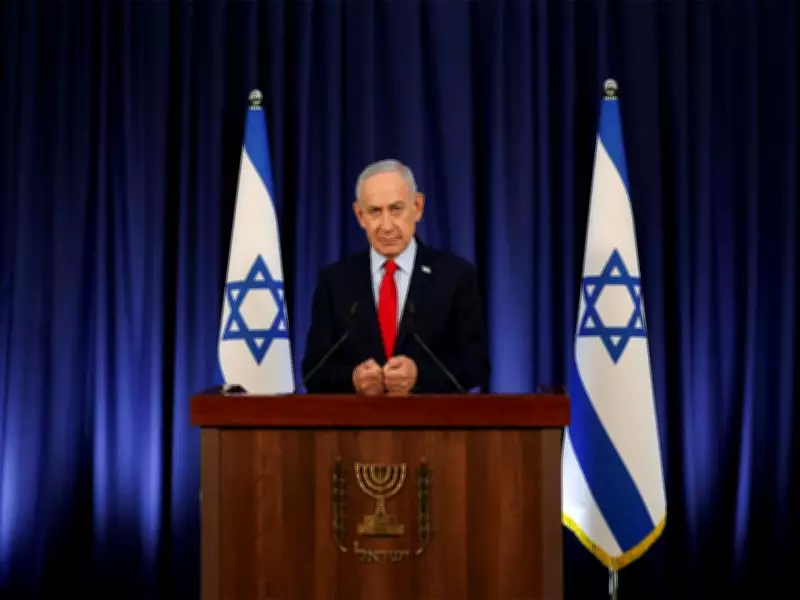
Israeli Prime Minister Benjamin Netanyahu made a historic visit to the United Arab Emirates, where he met with President Sheikh Mohamed bin Zayed Al Nahyan. The meeting, which took place in Abu Dhabi, marks a significant step in the normalization of relations between Israel and the UAE under the Abraham Accords. During the talks, the two leaders discussed regional security, economic cooperation, and ways to enhance bilateral ties. The visit was kept under wraps until Netanyahu's office issued a statement confirming it.
Diplomatic Breakthrough
The visit is seen as a major diplomatic breakthrough, as it is the first time an Israeli prime minister has publicly traveled to the UAE since the normalization agreement was signed in 2020. Netanyahu's office described the meeting as "warm and productive," emphasizing the shared interests of both nations in promoting stability and prosperity in the Middle East. The two leaders also explored opportunities for collaboration in technology, trade, and tourism.
Islamic State Denies Involvement
Meanwhile, the Islamic State (IS) militant group has denied reports that it was involved in any way with Netanyahu's visit. Earlier rumors had suggested that IS might have been coordinating with local actors to disrupt the trip, but the group's official media outlet released a statement rejecting these claims. "The Islamic State has no connection to the Zionist entity's visit to the Arabian Peninsula," the statement read. Security analysts note that such denials are common for IS, which often seeks to distance itself from rumors that could undermine its narrative.

The visit also sparked reactions from other regional players. Iran condemned the meeting, calling it a "betrayal of the Palestinian cause," while Saudi Arabia remained silent. The Palestinian Authority expressed disappointment, urging Arab nations to reconsider their normalization deals with Israel. Despite the criticism, both Israel and the UAE have signaled their commitment to deepening ties, with plans for further high-level exchanges in the coming months.
Netanyahu's trip to the UAE comes amid a backdrop of shifting alliances in the Middle East, as countries increasingly prioritize economic and security interests over historical conflicts. The Abraham Accords, brokered by the United States, have already led to the establishment of embassies, direct flights, and trade agreements between Israel and several Arab nations. Experts believe that this visit could pave the way for additional normalization deals, potentially including Saudi Arabia, which has so far held back.
In conclusion, Netanyahu's visit to the UAE represents a milestone in Israeli-Arab relations, despite ongoing opposition from some quarters. The Islamic State's denial of involvement highlights the complex security landscape in the region, but the overall trajectory points toward greater integration and cooperation. As the region evolves, the implications of this visit will likely be felt for years to come.