

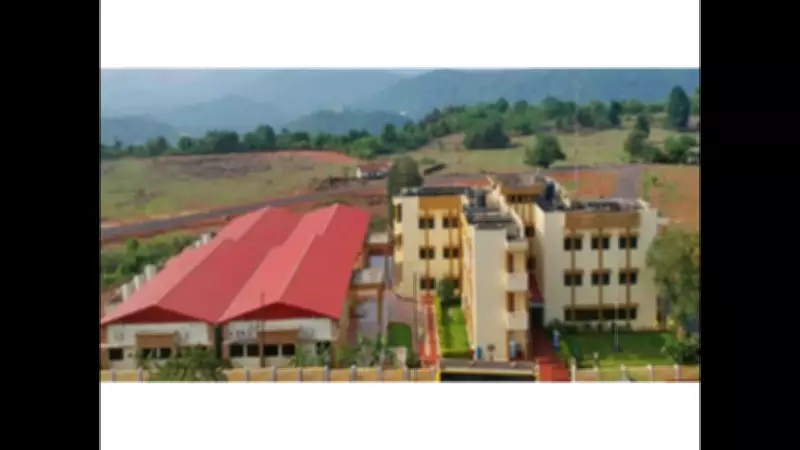
Margao: As India moves to bridge the gap between academic institutions and industrial ecosystems, stakeholders at a consultation meeting hosted by NIT Goa on Wednesday made a case for treating the entire state as one integrated university town. They contended that Goa's compact geography and seamless connectivity make it uniquely suited to anchor the Union government's ambitious University Township initiative, without the need for a standalone campus carved out of fresh land.
Background of the initiative
The ministry of education is envisioning a transformative shift in India's higher education landscape through the creation of five university townships near major industrial and logistics corridors. This model is inspired by global benchmarks such as Singapore's One-North R&D district and Japan's Tsukuba Science City. The idea is to move away from isolated campuses towards collaborative academic districts that co-locate institutions with industry R&D clusters, boosting employability, innovation and global competitiveness. NIT Goa is among nine NITs tasked with preparing a proposal for the initiative.
Key participants and recommendations
The meeting was attended by NIT Goa's director O R Jaiswal, five deans, and the training and placement officer. Participation also came from scientists at NCPOR and CSIR-National Institute of Oceanography, faculty from BITS Pilani Goa, Goa College of Agriculture, Dhempe College, and representatives from the directorate of technical education and the higher education department. A concept note presented by Damodar Reddy Edla of the CSE department and Jaiswal emphasised that a university town shapes not just academia but the entire surrounding community through research, innovation and cultural activity.

Key recommendations included integrating all colleges and universities into a knowledge-sharing network, synchronising academic calendars of IIT Goa, NIT Goa and BITS Goa with the higher education department, establishing equipment- and laboratory-sharing arrangements, and linking ITIs with mainstream BTech programmes through short certificate courses. Stakeholders also called for faculty exchange programmes, stronger industry-academia linkages with Verna-based industries, central grants awareness, and career counselling across all state institutions.
Future steps
The meeting will be held periodically to advance the proposal towards implementation.






