

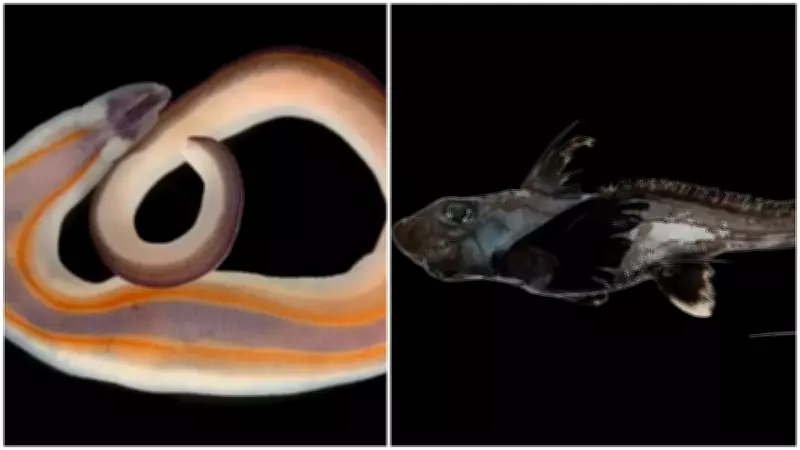
A comprehensive ocean census has unveiled more than 1,100 new species of marine life, marking a significant leap in our understanding of ocean biodiversity. Over the past year, an international alliance conducted 13 expeditions and nine workshops, working tirelessly to identify and categorize these newly discovered organisms—a process that is typically slow and painstaking.
Accelerating Discovery
The collaborative effort involved scientists from various countries who pooled resources and expertise to explore previously understudied regions of the ocean. The expeditions targeted deep-sea trenches, coral reefs, and other remote habitats, yielding a diverse array of species ranging from microscopic plankton to larger crustaceans and fish.
Challenges in Classification
Identifying new species is a rigorous process that involves detailed morphological analysis, DNA sequencing, and comparison with existing databases. The alliance streamlined this workflow through shared technology and data platforms, reducing the time from discovery to official classification. Despite the acceleration, each species still required careful validation to ensure accuracy.

The findings highlight the vast unknown biodiversity in our oceans and underscore the importance of continued exploration. Many of the new species may hold clues to evolutionary adaptations and potential applications in medicine or biotechnology.
Global Significance
This census is part of a larger effort to catalog marine life before it is impacted by climate change, pollution, and overfishing. The data will help inform conservation strategies and policy decisions. Scientists emphasize that the ocean remains largely unexplored, with estimates suggesting millions of species yet to be discovered.
The alliance plans to continue its work, with additional expeditions scheduled for the coming years. The newly documented species will be added to global biodiversity databases, making them accessible for further research.






