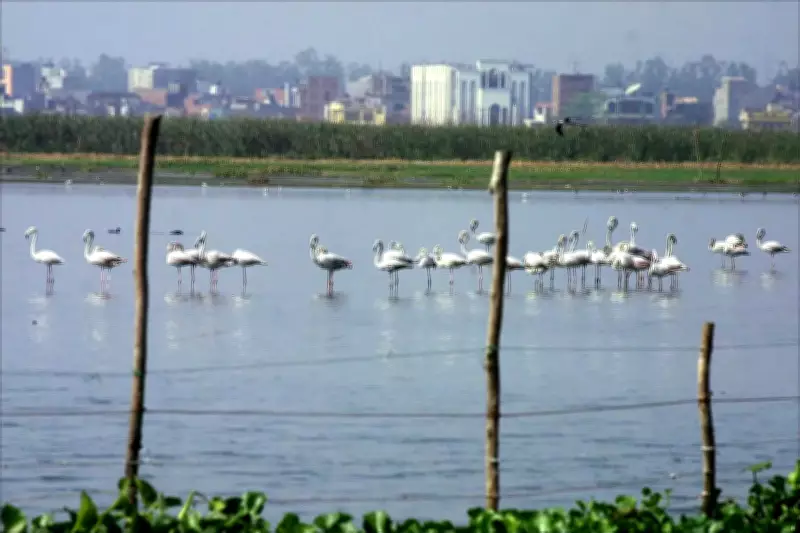
The Okhla Bird Sanctuary Conservation Collective has called on the irrigation and forest departments to enhance maintenance protocols and reduce disruption to wetland habitats during barrage repair work. The group also urged the use of technology and strict adherence to timelines to avoid prolonged dry spells that could harm birds and the sanctuary's ecosystem.
Meetings with Officials
Collective members held several rounds of discussions with forest and irrigation department officials. Shalini Singh, founder of Ecojeev Life Foundation and representing the collective, stated that a meeting took place with the divisional forest officer of GB Nagar on May 24. Subsequent meetings were held with the chief engineer-II (Yamuna) and the executive engineer of the head works division, Agra canal, Okhla, to finalize a proposal acceptable to all parties and aimed at preventing disruption to bird habitats.
Concerns Over Pre-Summer Drainage
The collective expressed concern about pre-summer and pre-monsoon drainage in recent years. Singh noted, “Mid-October to mid-November is the annual maintenance schedule for the barrage, which also disturbs migratory birds. However, when water is drained during March-April, it impacts both migratory and resident birds, as this is their breeding season.”

The sanctuary experienced drying between March 17 and 26 last year, and again on March 18 this year. Singh said there is no explanation for the drying, but it was attributed to important repair and maintenance work.
Impact of Repairs
“The last four repairs resulted in drainage and drying of the sanctuary water pool between mid-October to early November 2024, mid-March to end of March 2025, end-October to mid-November 2025, and mid-March to mid-April 2026. The sudden drop in water levels dried aquatic and semi-aquatic plants, including essential reed beds that are crucial habitats for many resident and migratory birds. It also disrupted natural wetland flora and allowed invasive species to take over. Drying of the benthic zone kills crucial benthic micro-organisms, worms, and small fish, which are vital for the food web supporting the sanctuary’s waterbirds,” Singh explained.
Proposed Adjustments
The proposal requests actionable adjustments to the current repair and maintenance framework, focusing on reducing drainage frequency and improving planning. “Deployment of modern techniques such as underwater welding and epoxy painting using camera-fitted and remotely operable vehicles can reduce the number of drainage days,” Singh said.
The collective also proposed that if drainage is necessary, the current October-November window should be shifted to late September to mid-October, to avoid extending into the main arrival period of migratory waterbirds from early October.
Mandatory Approvals
Birders have also proposed that higher-level approvals from both irrigation and forest departments should be mandatory for any maintenance work. This would ensure that the barrage not only serves irrigation purposes but also helps conserve one of the important wetlands of north India.