

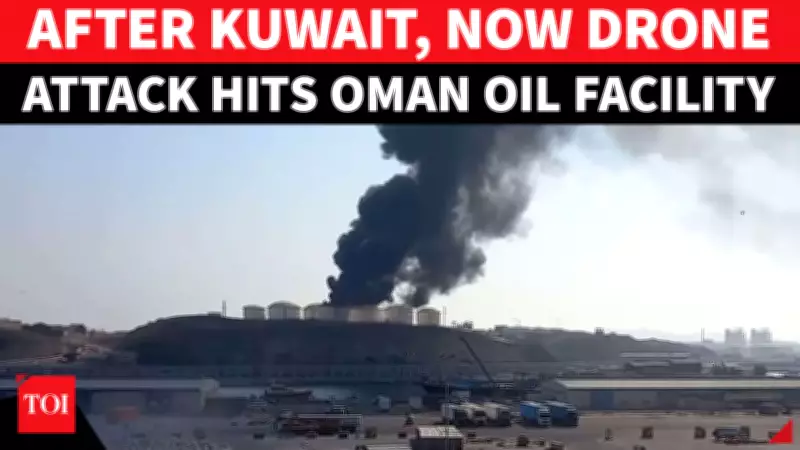
Fresh fears of a widening Middle East conflict have emerged after Oman suspended crude oil loading operations at its strategically important Mina Al Fahal terminal following an explosion near offshore mooring berths. Reuters, citing unnamed sources, reported that the blast was caused by a suspected drone attack, though authorities have not publicly identified those responsible. The incident has rattled global energy markets, with analysts warning that any disruption to Oman's oil exports could impact crude prices and regional shipping routes. Located on the Gulf of Oman outside the Strait of Hormuz, Mina Al Fahal is one of the country's most important oil export terminals.
Details of the Attack
The explosion occurred near the offshore mooring berths of the Mina Al Fahal terminal, which is operated by Petroleum Development Oman (PDO). According to sources, a drone struck the facility, causing a fire that was later brought under control. No casualties have been reported, but loading operations have been halted as a precautionary measure. The Omani government has not officially commented on the cause of the blast, but the incident has heightened tensions in a region already on edge due to ongoing conflicts involving Iran, Israel, and other Gulf states.
Global Energy Market Impact
The attack has sent shockwaves through global oil markets, with crude prices rising by over 2% in early trading. Analysts warn that any prolonged disruption at Mina Al Fahal could tighten supplies, especially as the terminal handles a significant portion of Oman's crude exports. The Strait of Hormuz, a vital chokepoint for global oil shipments, is already under strain due to recent skirmishes between Iran and Western navies. The closure of Mina Al Fahal could force tankers to seek alternative routes, adding to shipping costs and delays.

Regional Tensions and Suspicions
While no group has claimed responsibility, suspicions are likely to fall on Iran-backed militias or other non-state actors operating in the region. The attack comes amid a series of escalatory moves in the Middle East, including a recent car bombing in Tel Aviv claimed by Iran-linked hackers, and threats from Iranian officials against Gulf states. The United States has issued travel advisories for 14 Middle Eastern nations, urging caution amid heightened tensions. Analysts believe the attack could be part of a broader strategy to disrupt oil exports and pressure Western nations.
Reactions and Security Measures
Oman, which has traditionally maintained a neutral stance in regional conflicts, is now facing increased security challenges. The sultanate has not accused any party but has stepped up surveillance and patrols around critical infrastructure. International observers have called for a thorough investigation and urged all parties to avoid further escalation. The incident has also reignited debates about the vulnerability of oil infrastructure to drone attacks, which have become more frequent and sophisticated in recent years.
Broader Implications
The attack on Mina Al Fahal is the latest in a series of incidents that threaten to destabilize the global energy market. With the world still recovering from the pandemic and facing inflationary pressures, any supply disruption could have severe economic consequences. The situation remains fluid, and further attacks could lead to a broader conflict involving regional powers. As the investigation continues, all eyes are on Oman and its neighbors to see how they respond to this brazen act of aggression.






