Pakistan Renames Lahore Streets: A Shift Back to Historical Identity
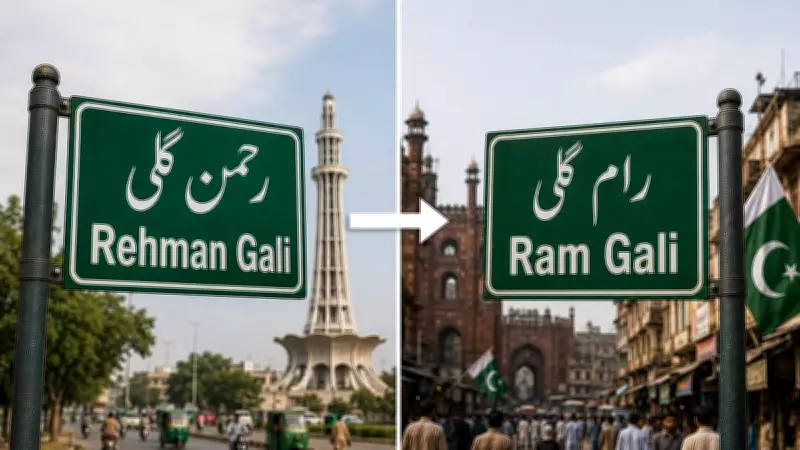
In a significant move over the past two months, Pakistan has renamed at least nine locations in Lahore, with many more expected to follow. The changes, which include converting 'Rehman Gali' to 'Ram Gali', are part of a broader effort to restore the city's historical and cultural heritage. This initiative has sparked both support and controversy among residents and political circles.
What Streets Have Been Renamed?
The renaming spree covers a variety of streets, squares, and neighborhoods. Notable changes include the transformation of Rehman Gali to Ram Gali, a name that harks back to Lahore's pre-partition era. Other locations have also been given their 'old glory' names, as authorities claim to be rectifying what they see as historical distortions. The exact list of renamed sites is still emerging, but officials confirm that more are in the pipeline.
Why Is This Happening Now?
The decision comes amid a broader cultural and political push by the current government, led by Prime Minister Shehbaz Sharif and his party, the Pakistan Muslim League-Nawaz (PML-N). The move is seen as an attempt to reclaim Lahore's pluralistic past, which included Hindu, Sikh, and Muslim influences. Supporters argue that renaming streets restores historical accuracy and honors the city's diverse heritage. Critics, however, view it as a political stunt aimed at appeasing certain factions.

Historical Context of Lahore's Street Names
Lahore, often called the cultural heart of Pakistan, has a rich history dating back centuries. Many streets were originally named after Hindu and Sikh figures, but after partition in 1947, several were renamed to reflect Islamic identity. For instance, Ram Gali was changed to Rehman Gali, and other locations underwent similar transformations. Now, the government is reversing some of these changes, arguing that the original names are part of Lahore's true identity.
Public Reaction and Political Implications
The renaming has elicited mixed reactions. Some residents welcome the change, seeing it as a step toward inclusivity and historical preservation. Others, particularly religious conservatives, oppose it, fearing it undermines Pakistan's Islamic character. Political analysts suggest that the PML-N government is using this issue to consolidate its voter base in Punjab, where Lahore is a key city. The opposition, including the Pakistan Tehreek-e-Insaf (PTI), has criticized the move as a distraction from pressing economic and social issues.
What's Next?
Authorities have indicated that the renaming process will continue, with more streets and public spaces set to revert to their pre-1947 names. A committee has been formed to oversee the changes and ensure they align with historical records. The government has also encouraged citizens to suggest other locations for renaming, promising a transparent process.
This development highlights the ongoing struggle over cultural memory and identity in Pakistan. As Lahore's streets regain their old names, the city's complex history is once again brought to the forefront, sparking debates that resonate far beyond its boundaries.