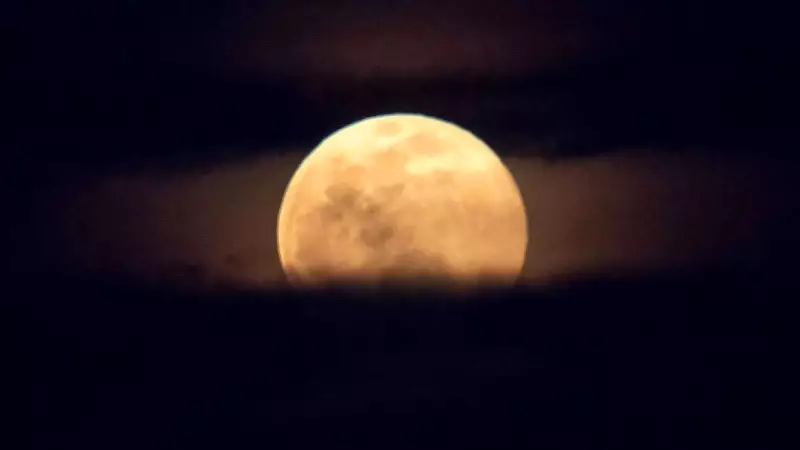
Pink Moon 2026: A Bright Celestial Event with Scientific and Cultural Significance
The night sky will host the 'Pink Moon' on April 1, 2026, a full moon event that combines intricate lunar orbital dynamics with rich historical cultural roots. Contrary to its name suggesting a dramatic color shift, this phenomenon is rooted in the physics of Earth, Moon, and Sun interactions, as well as seasonal plant cycles in the Northern Hemisphere.
Scientific Opportunities and Brightness Factors
For astronomers, the 2026 Pink Moon presents a prime chance to study differences between opposition observations and lunar perigee nuances. By examining enhanced luminosity and angular diameter, researchers can refine understanding of the Moon's eccentric orbit. NASA's Jet Propulsion Laboratory highlights the event's significance due to proximity to the vernal equinox, affecting the Moon's tilt and sunlight reflection off its regolith surface.
This alignment triggers an 'opposition surge,' making the Moon appear exceptionally bright by minimizing shadows from craters, thanks to Earth's viewing angle. At 02:12 UTC on April 2 (10:12 PM ET on April 1), maximum illumination occurs, with atmospheric stability key for observing features like Tycho crater and lunar maria.

Cultural Origins and Color Misconceptions
Will the Moon actually look pink? No, but the name originates from Algonquin Indians and the Old Farmer's Almanack, referencing Phlox subulata, an early spring bloom. Scientifically, a pink hue can appear near the horizon due to atmospheric scattering of shorter blue wavelengths, allowing longer red and pink wavelengths to reach the Moon's surface.
Tidal Impacts and King Tides
The 2026 Pink Moon coincides closely with perigee, the Moon's closest approach to Earth, leading to a 'perigean full moon' with heightened gravitational effects on oceans. This increases tidal ranges, though the most extreme 'King Tides' are forecast for the New Moon period from April 17-21, driven by aligned gravitational forces from the Moon and Sun.
Lunar Libration and Surface Visibility
During the full Pink Moon, observers can witness lunar libration—a nodding and swaying motion from the Moon's elliptical, tilted orbit. The US Naval Observatory notes that up to 59% of the lunar surface becomes visible in early April, revealing features on the far eastern limb typically hidden.
Topographic Flattening and Viewing Tips
At zero phase angle, with the Sun directly behind Earth relative to the Moon, the Opposition Effect eliminates shadows, boosting brightness but flattening topography, making highlands appear uniformly bright. For best viewing, the astronomic Full Moon peaks at 02:12 UTC on April 2, 2026, but it will seem full for about a day around this time, especially visible in the US on the evening of April 1.