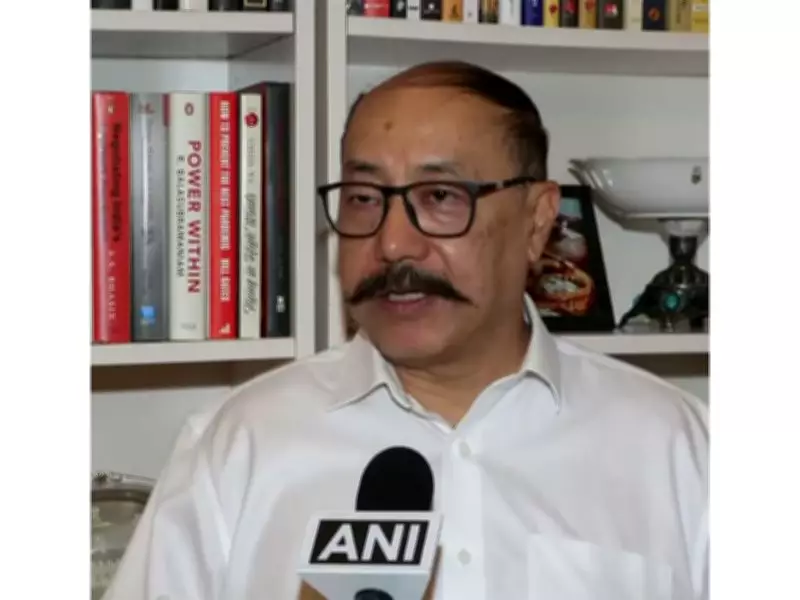
Rajya Sabha MP and former Foreign Secretary Harsh Vardhan Shringla has stated that Prime Minister Narendra Modi's upcoming three-nation visit to Indonesia, Australia, and New Zealand will significantly strengthen India's engagement with key Indo-Pacific partners by expanding strategic, economic, and people-to-people cooperation.
Visit Reflects Continued Focus on Act East and Mahasagar Policies
Speaking to ANI, Shringla emphasized that the visit reflects the continued focus of India's Act East and Mahasagar policies, building on the momentum from recent high-level engagements in the region. He noted that the visit follows a significant visit by the Prime Minister of Japan to India, highlighting the importance of these partners in the Eastern Indo-Pacific.
"I think it's a very important visit because it is a focus on our Indo-Pacific partners. We just had a very significant visit of the Prime Minister of Japan to India, and now this is followed by the PM's visit to Indonesia, Australia and New Zealand. These are very important partners in the Eastern Indo-Pacific," Shringla said.

Consolidation of Efforts to Enhance Ties
Shringla described the tour as a continuation of India's regional outreach and a consolidation of efforts already made by Prime Minister Modi to significantly enhance ties with these countries. He highlighted that cooperation extends beyond strategic and defence domains to include economic, cultural, heritage, and people-to-people connections.
"It is a continuation of our Act East and Mahasagar policies. From that perspective, it is also a consolidation of efforts that have already been made by Prime Minister Modi to significantly enhance our ties with these important countries, not only in the strategic and defence domains, but also on the economic side, cultural and heritage side, on the people-to-people connect areas," he said.
"I think there will be a lot of interest in this visit, and we will look forward to many very positive outcomes from these countries," he added.
Australia: Comprehensive Economic Partnership Agreement and Strategic Minerals
On Australia, Shringla noted that bilateral ties have grown rapidly over the past decade. He expressed optimism about progress on a Comprehensive Economic Partnership Agreement (CEPA), describing it as a balanced agreement that could be finalized during the visit or in the near future.
"Our relations with Australia have developed very quickly in the last decade or so. We signed an agreement on cooperation in economic and trade areas, and we are looking to consolidate that into a Comprehensive Economic Partnership Agreement, which is a balanced agreement, during the visit or at least in the near future," he said.
Shringla highlighted Australia's role as a key strategic partner in the Indo-Pacific, particularly through the Quad framework. He noted the recent meeting of Quad foreign ministers and emphasized that the partnership with Japan, Australia, and Indonesia is crucial for strategic cooperation in the Eastern Indo-Pacific.
"We just had a meeting of the QUAD foreign ministers. Japan, Australia, Indonesia -- these are all important aspects of that strategic partnership in the Indo-Pacific, especially in the Eastern Indo-Pacific, and I think we will be building on that significantly," he said.
He also pointed to cooperation in critical minerals and energy security, including the operational import of uranium from Australia. "We will also be looking at how we can access critical and strategic minerals. Uranium is one of them, where I think we have now more or less reached a stage where we can start operational import of uranium from Australia. That will be an important step, but also the import of a lot of natural resources from Indonesia, especially rare earths and strategic minerals," Shringla said.
New Zealand: Historic Visit After Four Decades
Speaking on New Zealand, Shringla described the visit as historic, marking the first by an Indian Prime Minister in four decades. He noted rapid strides in practical areas of cooperation, including a proposed free trade agreement (FTA).
"New Zealand is also a country with whom we have made very rapid strides in terms of developing practical areas of cooperation. A free trade agreement is one of them. It is very significant," he said.

Referring to New Zealand Prime Minister Christopher Luxon's support for the trade pact, Shringla said, "There's been some opposition to the free trade agreement in New Zealand, but Prime Minister Luxon has pushed it through because he believes that the partnership is a very significant one and will be to the benefit of both countries."
He also highlighted the large Indian-origin community in New Zealand, which contributes significantly to the country's economy. "I think this is the first visit by a Prime Minister of India in 40 years to New Zealand. Very significant from that point of view. We also have a very big Indian-origin community in New Zealand, who are contributing greatly to New Zealand's economy. The idea is to capitalise on all of that and see how we can take this important relationship to the next level," he added.
Tour Details and Bilateral Meetings
PM Modi will visit Indonesia from July 6 to 8 at the invitation of President Prabowo Subianto, followed by Australia from July 8 to 10 at the invitation of Prime Minister Anthony Albanese, and New Zealand from July 10 to 11 at the invitation of Prime Minister Christopher Luxon.
According to the Ministry of External Affairs, the Prime Minister will hold bilateral meetings with the three leaders, interact with members of the Indian diaspora, and review the full spectrum of bilateral cooperation during the three-nation tour.