

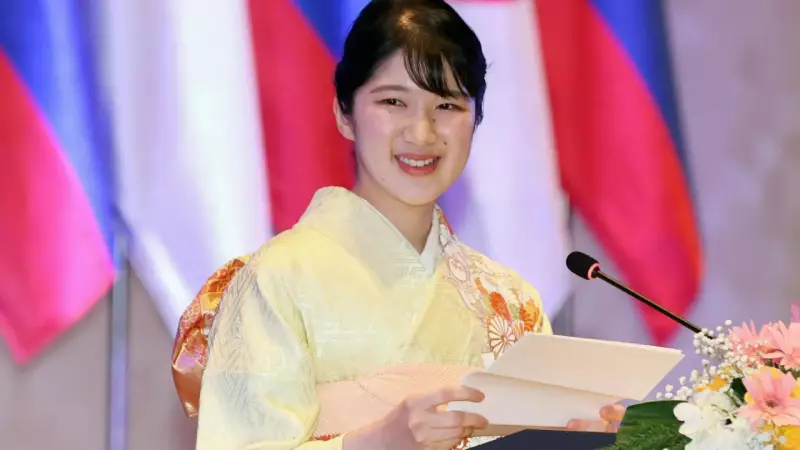
Japan's Princess Aiko, the only child of Emperor Naruhito and Empress Masako, celebrated her 24th birthday this week amidst a groundswell of public support. Her growing popularity is now directly fueling a renewed and urgent national debate: should Japan change its century-old law that bars women from ascending the Chrysanthemum Throne?
A Pop Star Reception and a Shrinking Royal Line
During recent official visits, such as one to Nagasaki with her parents, the cheers for Princess Aiko have notably overshadowed those for the Emperor and Empress. This adoration highlights her unique connection with the Japanese public, a bond that has only strengthened since she undertook her first solo overseas tour to Laos in November 2023. On that trip, representing the Emperor, she impressed with her diplomatic grace, intelligence, and warmth.
However, this popularity contrasts sharply with a looming crisis. Japan's imperial family is on the brink of a succession crisis. The current Imperial House Law, established in 1947 and based on an 1889 statute, permits only male heirs. Emperor Naruhito's immediate heir is his brother, Crown Prince Fumihito. The next in line is the Crown Prince's son, Hisahito, who is currently the only eligible male heir from the younger generation. With the family shrinking, experts warn the monarchy itself risks extinction if the rule is not changed.

Public Pressure and Political Resistance
The public's affection for Aiko has translated into active campaigns to amend the law. Supporters, including atomic bombing survivors like 82-year-old Setsuko Matsuo, openly root for her to one day become monarch. Cartoonist Yoshinori Kobayashi has created comic books advocating for Aiko's right to succeed, which supporters systematically send to parliamentarians to build awareness. Others have taken to YouTube and leaflet distribution to rally public opinion.
This push faces stiff resistance from conservative lawmakers. A government panel in 2022 recommended maintaining the male-only succession while allowing female members to retain royal status after marriage. Prime Minister Sanae Takaichi is among those opposed to allowing a female monarch. This stance persists despite international pressure; in 2023, a UN committee urged Japan to allow a female emperor to promote gender equality, a report Tokyo dismissed as "regrettable."
A Historical Precedent and a Stalled Proposal
Opponents of change often cite tradition, but history shows that Japan has had eight female monarchs in the past. The last, Empress Gosakuramachi, ruled until 1770. The modern debate is not new. In 2005, with a lack of male heirs, the government formally proposed allowing a female monarch. That proposal was shelved after the birth of Prince Hisahito in 2006, allowing conservative factions to argue the immediate crisis was averted.
Now, nearly two decades later, with Princess Aiko coming into her own as a beloved public figure and the royal family's future again looking precarious, the discussion has regained intense momentum. The princess herself, who has followed her father's lead in emphasizing the importance of remembering history, as seen in visits to Nagasaki and Okinawa, remains the human face of this constitutional dilemma. The question for Japan is whether it will modernize its ancient institution in time to secure its survival.






