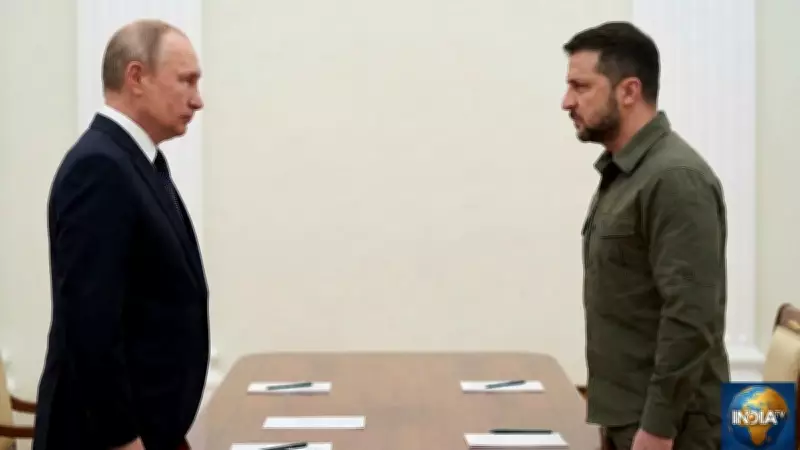
Russian President Vladimir Putin has rejected Ukrainian President Volodymyr Zelenskyy's offer for a face-to-face meeting, stating that the time is not ripe for such a dialogue. The announcement came during a press conference where Putin elaborated on the reasons behind his decision.
Putin's Stance on the Meeting
Putin emphasized that a direct meeting between the two leaders would only be meaningful if both sides are adequately prepared and have concrete proposals on the table. He argued that currently, Ukraine has not demonstrated a genuine willingness to address the core issues that have led to the ongoing conflict. "We are not against meetings, but they must be well-prepared and result-oriented," Putin said.
Lack of Progress in Peace Talks
The Russian president pointed out that previous rounds of negotiations have failed to yield significant progress. He accused Ukraine of backtracking on agreements made during earlier talks, particularly regarding the status of Donbas and the implementation of the Minsk agreements. "Without a clear commitment to previously agreed terms, any meeting would be counterproductive," he added.

Conditions for Future Engagement
Putin outlined several conditions that would need to be met before he would consider a face-to-face meeting. These include Ukraine's recognition of Crimea as part of Russia, the demilitarization of Ukraine, and guarantees that Ukraine will not join NATO. He stressed that these are non-negotiable for Russia's security interests.
Zelenskyy's Offer
Earlier this week, President Zelenskyy had proposed a direct meeting with Putin to discuss de-escalation and a potential ceasefire. He expressed willingness to discuss neutral status for Ukraine and security guarantees. However, Putin's rejection indicates that the two sides remain far apart on key issues.
International Reactions
The international community has reacted with concern to Putin's rejection. Western leaders have urged both sides to continue diplomatic efforts, while some analysts suggest that Putin's stance may be an attempt to gain leverage ahead of potential future talks. The United Nations has called for an immediate ceasefire and renewed dialogue.
Implications for the Conflict
The rejection of a face-to-face meeting is likely to prolong the conflict, as diplomatic avenues appear to be stalled. Military operations continue in eastern Ukraine, with both sides reporting casualties. The lack of direct communication between the leaders reduces the chances of a breakthrough in the near term.
In conclusion, Putin's refusal to meet Zelenskyy underscores the deep mistrust and divergent objectives between Russia and Ukraine. Until fundamental disagreements are resolved, the prospect of a peaceful resolution remains uncertain.