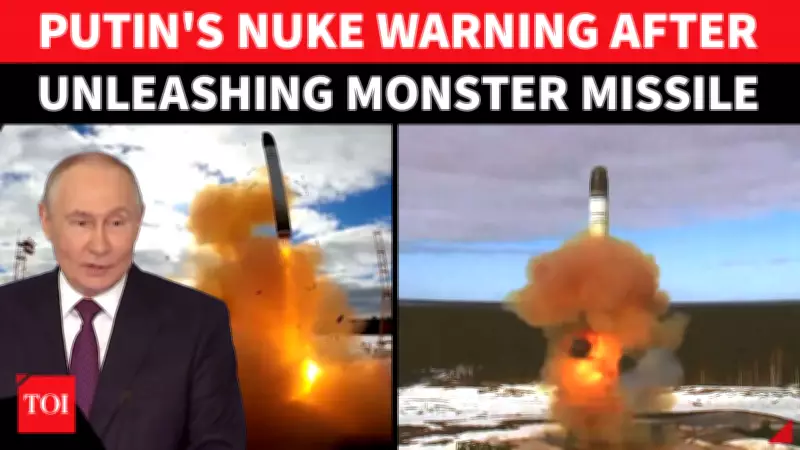
Russian President Vladimir Putin used a ceremonial visit to the Moscow Institute of Thermal Technology to deliver a pointed message on Russia's nuclear future, vowing to build missile systems capable of defeating all modern and future anti-missile shields. Marking the institute's 80th anniversary, Putin praised its scientists and awarded chief designer Yuri Solomonov the Order for Valiant Labour, calling their work vital in the name of Russia.
Putin's Announcement on Strategic Nuclear Forces
During the event, Putin emphasized that Russia will continue to develop its strategic nuclear forces, ensuring they remain a credible deterrent against any potential aggression. He stated that these new systems would be designed to penetrate even the most advanced missile defense technologies, both current and those yet to be developed. This statement comes shortly after the successful launch of the RS-28 Sarmat missile, also known as SATAN II, which is one of the world's most powerful intercontinental ballistic missiles.
Institute's Role and Recognition
The Moscow Institute of Thermal Technology has been a key player in Russia's missile development programs. Putin highlighted the institute's contributions to national security and awarded chief designer Yuri Solomonov the Order for Valiant Labour in recognition of his decades of service. Solomonov has been instrumental in developing several generations of Russian missiles, including the Topol and Yars systems.

Implications for Global Security
Putin's announcement is likely to escalate tensions with Western nations, particularly the United States, which has been modernizing its own nuclear arsenal and missile defense systems. The Russian leader's vow to build missiles capable of defeating all anti-missile shields signals a new arms race in strategic weapons. Analysts suggest that this could lead to increased military spending and a renewed focus on nuclear deterrence strategies worldwide.
Reactions and Analysis
International reactions have been mixed, with some experts warning that such developments could undermine existing arms control agreements. The United States has not yet officially responded, but previous statements from the Pentagon have expressed concerns over Russia's nuclear modernization. Meanwhile, Russian officials have defended the move as necessary for maintaining strategic parity and ensuring national security.