

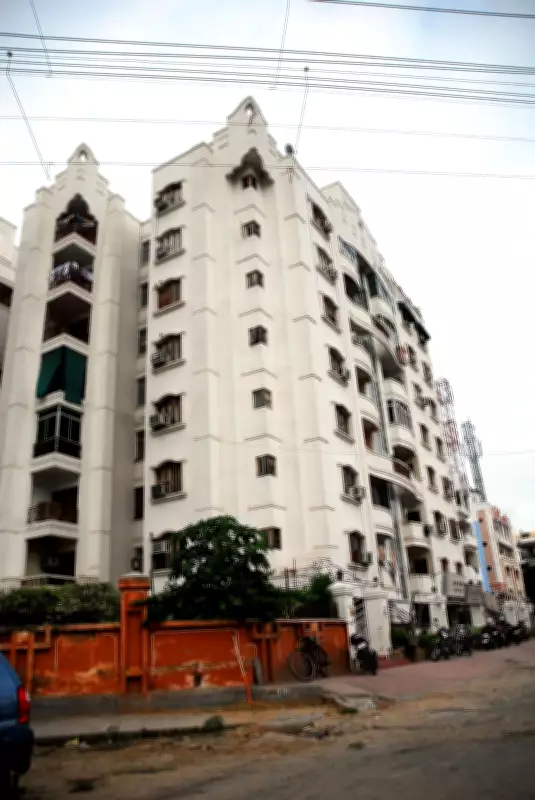
Jaipur: After high-rise complexes, Rajasthan's cities may soon see skyscrapers rivalling Mumbai, Bengaluru and Delhi. Following a regulation of the central government notified in January 2026, the state government has issued an order allowing building heights to extend without a fixed cap.
Speaking to TOI, a senior urban development and housing (UDH) department official said that the move will accelerate vertical development beyond housing, enabling commercial towers, schools, and hospitals to integrate mixed-use facilities within single structures.
Key Changes in Building Height Regulations

Until now, the construction of buildings in Rajasthan's cities was permitted only up to a maximum height of 70 metres. This 70-metre limit was established in 2020, based on the operational capacity of the state's tallest fire ladder (firefighting aerial platform). Now, under the new provision, the height of a building can be extended to any limit, provided the buildings are equipped with state-of-the-art and robust firefighting systems. In short, buildings must adhere to the National Building Construction Standards (NBCS) 2026, as stated by the town planner.
Central Government Initiative
The Centre in January 2026 formulated the Compliance Reduction and Deregulation (Phase-II) initiative. This notification has been issued to substitute the regulations under the Model Rajasthan Urban Area Building Regulations, 2025 in accordance with this initiative. The notification was issued on May 29.
A senior town planner of the UDH department explained that stacking services and residences can lead to significant land savings in dense urban pockets. The central government's deregulation initiative highlighted international case studies depicting how schools in Mumbai have used vertical advantage, instead of a large plot, by constructing swimming pools on the rooftop or other recreational facilities within the building itself.
Abolition of Land Use Change Requirements
The government is also moving to abolish Sections 90A and 90B of the Rajasthan Land Revenue Act, 1956, to streamline approvals. This means, in future, there will be no requirement to change the use of land in Rajasthan, a senior town planner disclosed.
This development is expected to transform the urban landscape of Rajasthan's cities, promoting vertical growth and efficient land use. The new regulations aim to attract investment and modernize infrastructure, aligning with global urban development trends.






