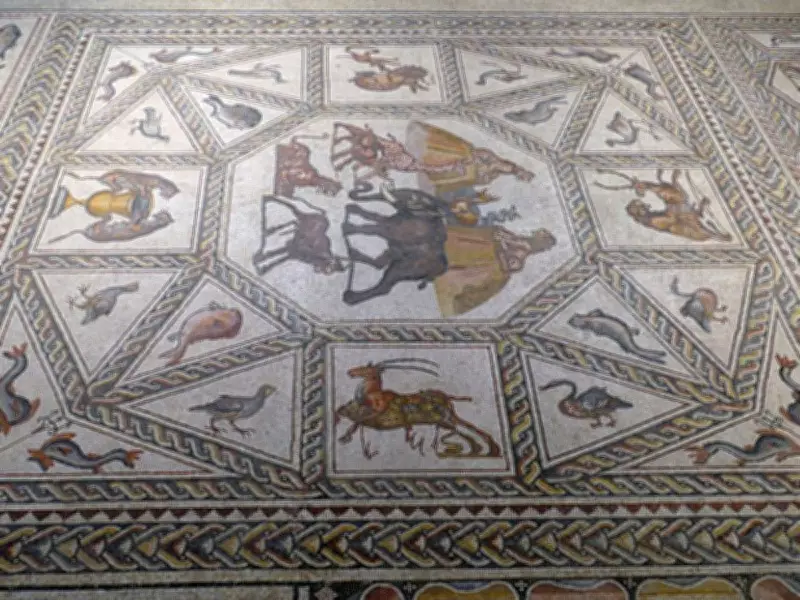
In 1996, during road widening in the Israeli city of Lod, an extraordinary discovery was made. As labourers prepared the area for construction, they noticed signs of a mosaic pavement beneath the modern road. Instead of scattered tiles, they uncovered the edge of a remarkable Roman mosaic picture buried at a shallow depth below the street.
International Attention and the Lod Mosaic
The news of this find quickly became a topic of international discussion. According to the Metropolitan Museum of Art website, the large-scale and technically impressive mosaic, named the Lod Mosaic, depicts a complex scene of mammals, birds, fish, sea monsters, merchant ships, plants, and geometric patterns. The discovery of such an extraordinary object in the heart of a living city was surprising.
History Buried Underground
The story of the Lod Mosaic illustrates a peculiarity of modern urban archaeology. In historic cities, ancient buildings are preserved due to the nature of urban development. Over centuries, subsequent layers of buildings appear atop previous structures, with each generation laying down soil, rocks, and paving. Research published in PLOS ONE notes that durable mosaic floors have been preserved for centuries beneath layers of soil and later construction. A floor covered with several meters of soil lasts much longer than any exposed structure. In the case of the Lod Mosaic, the ancient floor was so well protected that the intricate pattern remained intact for centuries.

Why the Mosaic Survived
Roman mosaics were valued for their physical longevity. Composed of thousands of small squares of tough stone and tinted glass pieces called tesserae, placed into a deep layer of mortar, these masterpieces could survive the elements when buried. While open pavements erode due to environmental factors, a buried mosaic stays safe under stable conditions.
Archaeological studies show that floors with elaborate designs of animals, humans, or items are rare in the eastern Mediterranean region. Thus, the Lod Mosaic was an amazing discovery for local history. It was not just decorative but a sophisticated artwork language throughout the Roman Empire. Wealthy citizens would display such exquisite floors to visitors, demonstrating their tastes and status.
Finding a Delicate Balance in Modern Cities
The story from Lod illustrates how mundane utility projects can lead to unpredictable historical discoveries. Archaeological monitoring of municipal cuts and road laying is common, as these projects often uncover deeply hidden layers of ancient cities.
However, such situations create internal conflict. Heavy earthmoving equipment poses a serious threat to historical artefacts, yet these operations give archaeologists a unique chance to discover items that would otherwise remain unnoticed. Thanks to careful handling, the Lod Mosaic became world-famous as one of the best-preserved examples of such finds.
About the Author
The TOI Science Desk is an inquisitive team of journalists, ceaselessly delving into the realms of discovery to curate a captivating collection of news, features, and articles from the world of science for readers of The Times of India. Consider us your scientific companion, delivering a daily dose of wonder and enlightenment. Whether it is the intricacies of genetic engineering, the marvels of space exploration, or the latest in artificial intelligence, the TOI Science Desk ensures you stay connected to the pulse of the scientific world. We are not just reporters; we are storytellers of scientific narratives, committed to demystifying science and making it accessible for all backgrounds.