

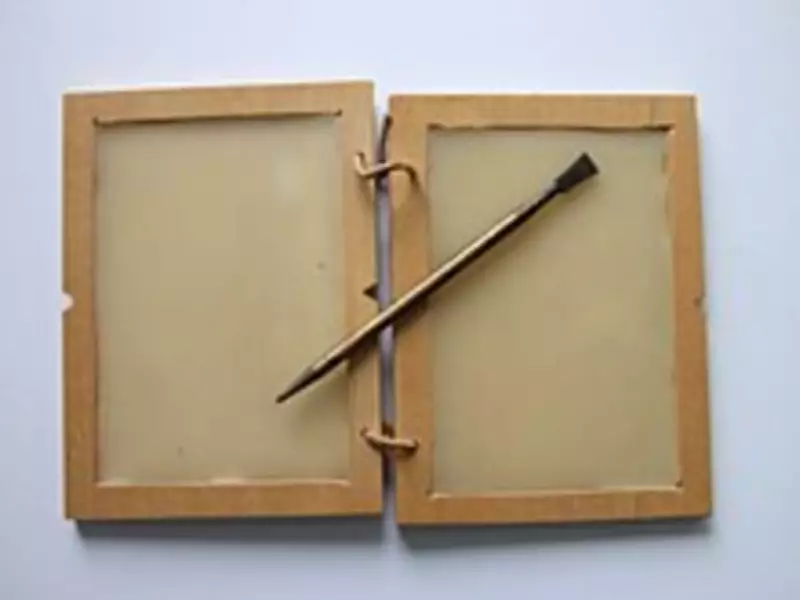
In 2010, builders digging on a London construction site unearthed a collection of waterlogged wooden tablets buried deep in the mud. These delicate artefacts were no ordinary pieces of wood; they contained the oldest preserved handwriting ever discovered in the city. These Roman tablets, thanks to their unique underground environment, provide a rare, up-close look at the everyday lives and personal thoughts of Londoners in the first century AD.
Voices of the Ancients Saved by Mud
The Bloomberg tablets, discovered in excavations at the Bloomberg site, survived for nearly two thousand years by being buried in wet, low-oxygen soil. Organic materials like wood typically decay when partly saturated and exposed to air under normal conditions. It was this dark, waterlogged earth that formed a kind of natural sealed archive beneath the modern streets of the city.
However, the wet mud protects the physical shape of the wood while also making the material incredibly weak. Waterlogged wood is prone to warping, cracking, or completely collapsing when removed from the earth and exposed to dry air, according to a study on archaeological wood preservation published in Frontiers in Chemistry. To avoid this, conservation experts must act quickly after excavation to carefully dry the wood and replace trapped water with stabilising materials that support the delicate cell walls.

Wood Strength with Ink
The Bloomberg tablets are historically significant because they were originally written in wax with a stylus; the wax has vanished, but scratches survived on the wood. The Romans wrote on various materials, such as wax tablets and papyrus, but wooden tablets made from wax are rare because the wood usually decays.
In a research paper published in Scientific Reports, regular Roman black ink was a blend of amorphous carbon, derived from burnt organic materials, and a natural binding agent called Arabic gum. This carbon-based ink, applied on tough wood, preserved everyday communication, business transactions, personal names, and casual notes. These legible traces provide historians with a clear picture of how everyday people spoke, counted, and kept in touch with each other in early Roman London.
Modern Science Unveils Secrets
Old handwriting on dark, waterlogged wood requires high-tech methods to decipher. The wood can stain over centuries, and the ink fades until it is practically invisible to the naked eye. To solve this problem without harming the fragile objects, researchers use non-invasive imaging and analytical tools.
According to a study published in the Journal of Analytical Methods in Chemistry, experts use tools such as Raman spectroscopy, X-ray fluorescence, and scanning electron microscopy to study Roman wooden tablets. By applying these advanced scientific techniques, researchers can differentiate between actual ink marks and natural soil stains and wood grain. These tools uncover the hidden chemical signature of the carbon ink, allowing archaeologists to read the original text and distinguish different handwriting styles without damaging the ancient wood.
London's Earliest Written Voices
The Bloomberg tablets have completely transformed our understanding of the timeline of early London. Before the discovery of these items by builders in 2010, the documentary record of the city's first decades under Roman rule was scanty and largely reliant on stone monuments or public buildings.
These small, everyday documents show that writing and record-keeping were a routine part of working life from the very first days of the city. The tablets contain no great political speeches, only the practical paper trail of a busy trading town. Careful urban archaeology and conservation science have allowed experts to rescue London's first written voices from the mud, and the city's oldest stories are now able to be read.






