

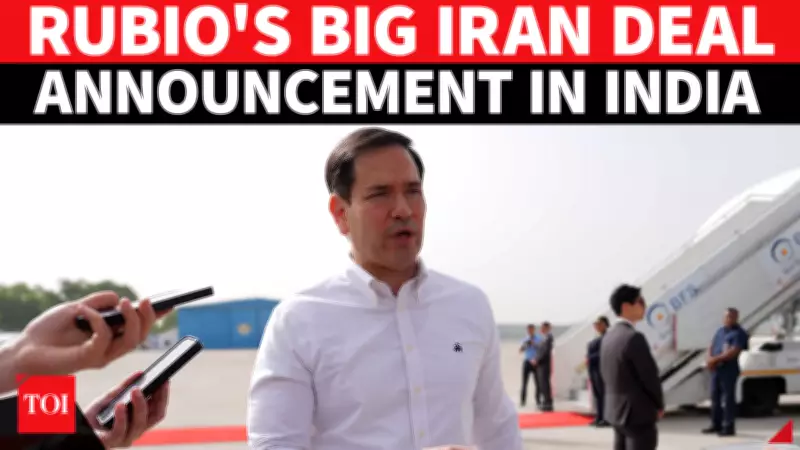
US Secretary of State Marco Rubio has revealed that negotiations with Iran remain active, with a “solid” proposal on the table and growing support from Gulf nations and global partners. In a statement on May 25, 2026, Rubio emphasized that former President Donald Trump will not rush into a weak agreement and will give diplomacy every chance before considering alternatives.
Key Points of the Proposal
Rubio highlighted that the proposal has garnered increasing backing from Gulf states and other international allies. He stressed the importance of a robust deal that addresses longstanding concerns, particularly regarding Iran's nuclear program and regional activities. The Secretary of State reiterated that the US approach under Trump remains cautious and deliberate, avoiding any hasty commitments that could compromise national security.
India-Pakistan Dimension
Addressing Pakistan’s reported mediation role in the Iran talks, Rubio noted that India’s longstanding concerns focus on armed groups operating from Pakistani territory. He clarified that Pakistan’s involvement in the Iran discussions did not emerge as a major issue, but the broader context of regional stability remains critical. The reference to Pulwama underscores the sensitivity of India-Pakistan relations in the context of counterterrorism efforts.

Diplomatic Strategy
Rubio’s remarks come amid heightened geopolitical tensions, with the US seeking to balance pressure on Iran while avoiding military escalation. The proposal is seen as a potential breakthrough, with Gulf nations playing a key role in facilitating dialogue. The Secretary of State’s mention of Trump’s approach signals a preference for diplomatic solutions over confrontation, though options remain open if negotiations falter.
Reactions and Implications
The announcement has drawn attention from global media, with analysts noting the potential for a shift in US-Iran relations. India’s position on Pakistan-based militant groups remains a priority, and the US acknowledgment of these concerns may strengthen bilateral ties. Meanwhile, the involvement of Gulf states adds a layer of regional cooperation that could influence the outcome of the talks.
As developments unfold, the international community watches closely to see whether this “solid” proposal will lead to a comprehensive agreement or face hurdles from various stakeholders. Rubio’s statement underscores the complexity of Middle East diplomacy and the interconnected nature of regional security issues.






