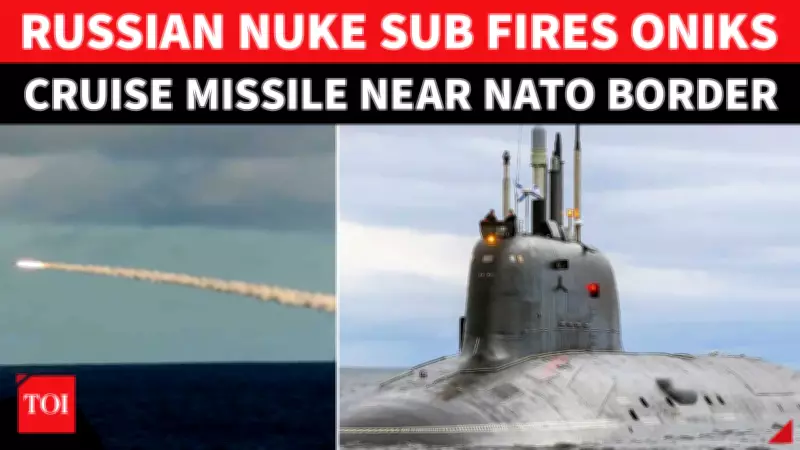
Russia's nuclear-powered attack submarine Arkhangelsk has launched a P-800 cruise missile in close proximity to NATO territory, reigniting concerns over the formidable capabilities of the Yasen-M class submarines. This vessel, known for its extreme stealth, advanced sonar systems, multi-role flexibility, and the capacity to carry Zircon hypersonic missiles, is considered one of the most dangerous underwater platforms currently in service. Military experts assert that the submarine was specifically designed to challenge carrier strike groups and dominate undersea warfare. The launch underscores Russia's growing naval power and the evolving threat landscape for NATO forces in the region.
Key Capabilities of the Yasen-M Class
The Yasen-M class, of which the Arkhangelsk is a part, represents a significant leap in submarine technology. Its stealth capabilities make it extremely difficult to detect, while its advanced sonar systems provide superior underwater situational awareness. The submarine's multi-role flexibility allows it to engage a wide range of targets, from surface ships to submarines and land-based installations. Most notably, the Yasen-M class is equipped to launch the Zircon hypersonic missile, which travels at speeds exceeding Mach 8 and can evade most current missile defense systems.
Strategic Implications for NATO
The launch of the P-800 cruise missile near NATO territory is a clear demonstration of Russia's ability to project power in contested waters. Analysts warn that the combination of stealth and hypersonic strike capability poses a direct challenge to NATO's naval dominance, particularly in the Arctic and North Atlantic. The Arkhangelsk's operations in the Barents Sea highlight the strategic importance of this region, where Russian submarines can threaten NATO supply lines and carrier strike groups. As tensions continue to rise, the Yasen-M class is likely to play a central role in Russia's naval strategy.

Expert Analysis
Defense experts emphasize that the Yasen-M class was built with the explicit purpose of countering advanced Western naval assets. Its ability to operate undetected and deliver hypersonic strikes makes it a game-changer in undersea warfare. The recent missile launch serves as a reminder of the evolving military balance and the need for NATO to adapt its anti-submarine warfare capabilities. With the integration of the Zircon missile, the Yasen-M class can strike targets at long range with minimal warning, complicating defensive planning for NATO forces.
In summary, the Arkhangelsk's missile launch is a stark illustration of Russia's advancing naval technology and its willingness to test NATO's response. As geopolitical tensions persist, the Yasen-M class submarines will remain a key focus for military analysts and strategists on both sides.