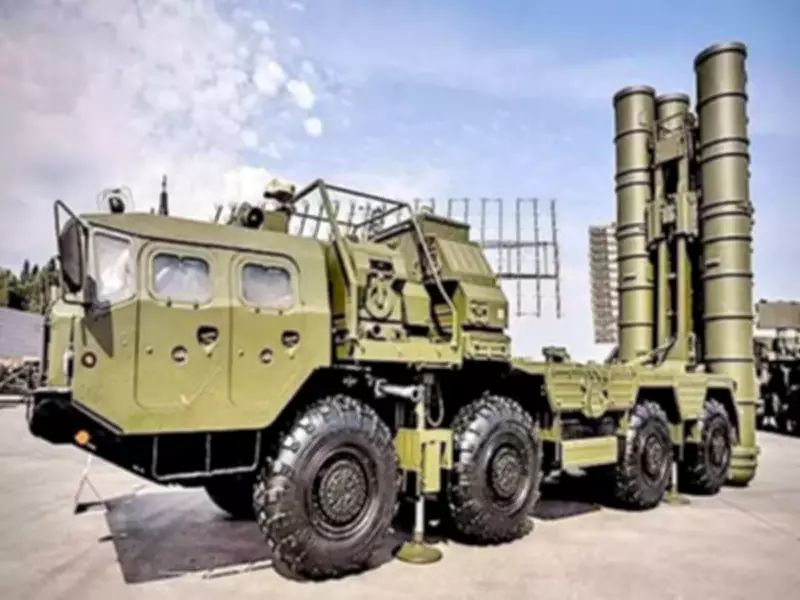
The S-400 Triumf air defence system has emerged as the linchpin of India's air defence architecture, as demonstrated during Operation Sindoor. This system can fire missiles at aircraft as far as 400 kilometers away, enabling control over vast swathes of airspace. It successfully shot down a large Pakistani aircraft at a distance exceeding 300 kilometers. With the delivery of the fourth S-400 system, the Indian Air Force has expanded the area under coverage, further strengthening national security.
Core Capabilities and Strategic Significance
The S-400 system rests on a series of long-range radars and interceptor missiles designed to neutralize diverse aerial threats, from drones to ballistic missiles. Its ability to perform multiple air defence roles makes it a versatile asset. The genius of the S-400 Triumf lies in its integration of powerful phased-array radars with multiple missile types, each tailored to different ranges and threats. The system can launch missiles vertically, allowing rapid engagement in any direction, and its radars provide full 360-degree coverage at ranges of up to 600 kilometers, enabling detection of stealth aircraft and high-speed projectiles. A full squadron can track and engage dozens of targets simultaneously, making it highly effective in complex air combat environments.
Comparison with Other Systems
The S-400 can intercept threats at ranges far exceeding those of systems such as the US Patriot PAC-3 or Europe's SAMP/T NG. It also defends against intermediate-range ballistic missiles, a capability absent in most Western systems. This strategic edge positions the S-400 as one of the most formidable air defence systems globally.

Advanced Radar Suite
The S-400 Triumf is built around a sophisticated radar suite that provides layered surveillance, target acquisition, and fire control. At its core is the 91N6E 'Big Bird' radar, an L-band long-range acquisition radar capable of detecting large aircraft up to 600 kilometers away, resistant to jamming and stealth countermeasures. Supporting this is the 92N6E 'Grave Stone' radar, an X-band engagement radar that manages fire control and missile guidance, able to lock onto 36 targets and guide missiles to 72 simultaneously.
To cover altitude ranges, the 96L6E all-altitude detector radar operates in the S-band, detecting targets up to 300 kilometers, including low-flying aircraft and cruise missiles. This makes it effective in mountainous terrain or electronic countermeasure-heavy environments. Optional radars like the Protivnik-GE extend early warning against stealth aircraft. Together, these radars provide 360-degree situational awareness, eliminate blind spots, and enable the S-400 to track hundreds of targets, ensuring layered defence and rapid, coordinated responses to diverse aerial threats.
Versatile Missile Family
The S-400 Triumf is distinguished by its versatile missile family, each designed to counter specific categories of aerial threats. At the top end is the 40N6E, the longest-range missile, capable of engaging high-altitude aircraft and aerodynamic targets at distances of up to 400 kilometers. This missile provides the strategic reach needed to neutralize threats before they approach critical airspace. Complementing it is the 48N6E3, a long-range interceptor effective against aircraft, cruise missiles, and even ballistic missiles, with an engagement radius of up to 250 kilometers. It forms the backbone of the system's layered defence, ensuring robust coverage against conventional aerial threats.
For medium-range engagements, the 9M96E2 is tailored to counter highly maneuverable targets such as fighter aircraft and drones. With a range of up to 120 kilometers, it offers agility and precision, making it particularly effective against fast, evasive threats. Finally, the 9M96E provides short-to-medium-range protection, designed for precise point defence against low-altitude, fast-moving targets, with a reach of up to 40 kilometers. This missile is crucial for close-in defence, ensuring that no threat slips through the outer layers.

Strategic Deployment and Impact
Strategically, the S-400 has been deployed by Russia, China, Turkey, and India, and has proven its utility in contested theatres such as Syria and Ukraine. For India, the system provides a critical shield against both Pakistani and Chinese aerial threats, covering large swathes of territory. Its combination of long-range engagement, multi-target tracking, and advanced radar coverage makes it more effective than most other systems, positioning it as one of the most formidable air defence systems in the world.