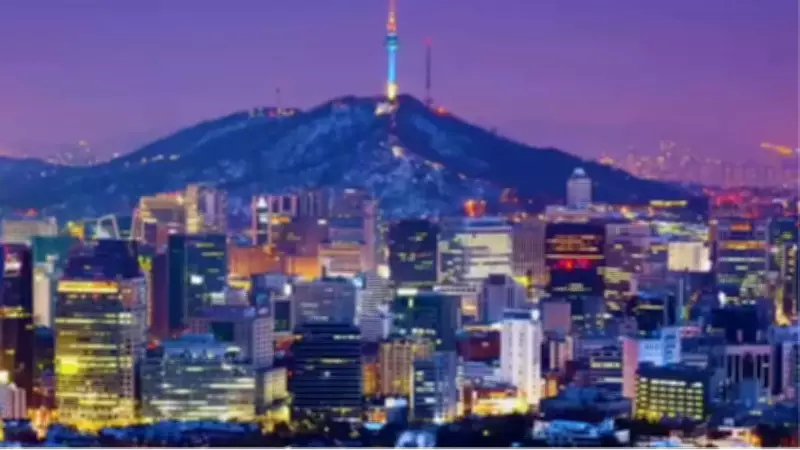
Seoul's Dazzling Digital Billboards Face New Dimming Guidelines
SEOUL: The ambitious vision to transform downtown Seoul into a luminous spectacle surpassing New York's Times Square has encountered a significant regulatory hurdle. In response to a barrage of public complaints, South Korean authorities have introduced new guidelines to dim the vibrant digital billboards that illuminate the capital city.
A Surge in Screens and Social Media Buzz
The proliferation of massive electronic screens across Seoul has been remarkable. These often-curved displays, showcasing everything from waving K-pop stars to leaping dolphins in stunning 3D, have skyrocketed in number, generating considerable buzz on social media platforms. This expansion is largely driven by the designation of several areas as free advertising zones and a major urban project aimed at revitalizing Seoul's central Gwanghwamun Square by 2033 into a "media gallery" intended to eclipse Times Square.
One particularly impressive installation in Gwanghwamun Square spans the size of four basketball courts. Its 6K ultra-high-resolution display is cleverly split across two sides of a building, creating an immersive wrap-around visual experience. The symbolic heart of the city now hosts four large digital screens, the bustling Myeong-dong shopping district features three, and the glitzy Gangnam area—synonymous with South Korea's economic and cultural prowess—boasts an impressive seventeen.

"The colors are so vivid that it feels like they are spreading out like waves," remarked Kim Hee-soo, a 23-year-old art student, to AFP on a recent evening. "I didn't realize it before, but the glass facades of the buildings also feel vibrant."
Public Backlash and New Regulatory Measures
However, not all residents share this enthusiasm. Nighttime motorists, in particular, have been vocal about the disruptive glare from these brilliant displays, leading to thousands of complaints in recent years. This public outcry has prompted city officials to implement new recommendations, effective from Wednesday, designed to tone down these imposing installations.
The new guidelines establish strict limits on luminous intensity. They recommend a maximum of 7,000 candelas during daylight hours—half the level previously detected on some screens—and a significant reduction to just 350-500 candelas at night. Additionally, the city advises minimizing the use of high-brightness white backgrounds, employing gradual instead of abrupt transitions in brightness, and avoiding repetitive flashing and intense strobe effects.
"These recommendations are a reasonable improvement," explained local official Choi In-gyu. "They adjust brightness beyond what is necessary to consider the readability of advertisements and reduce visual fatigue for citizens, while also enhancing energy efficiency."
Balancing Safety, Aesthetics, and Energy Concerns
The timing of these guidelines is notable. While they were formulated prior to recent global energy concerns, authorities anticipate they will also reduce the installations' electricity consumption by approximately 15 percent, aligning with broader governmental efforts to promote energy efficiency.
Public opinion on the matter remains divided. Oh Se-min, a 68-year-old retiree from the construction industry, told AFP that while he is not personally bothered by the billboards, public safety must be paramount. "If drivers say they experience glare, then it should definitely be addressed to prevent accidents," he stated.
Conversely, Lee Youn-kyu, a 55-year-old shipping industry worker, expressed reservations about the need for such stringent measures. He argued that Seoul's billboards are less extreme than those in other global metropolises. "We also can't ignore the overall convenience for pedestrians and the aesthetic value these lights add," Lee told AFP. "I think it's important to find a good balance between all of these factors."
Despite the new regulations, the city's grand vision for its media landscape remains intact. "Gwanghwamun Square will be reborn as a new media gallery that people around the world can enjoy," declared district mayor Chung Moon-heon last year, promoting the project under the ambitious slogan "Beyond your imagination, beyond Times Square." The challenge now lies in achieving this dazzling future without blinding its citizens.