

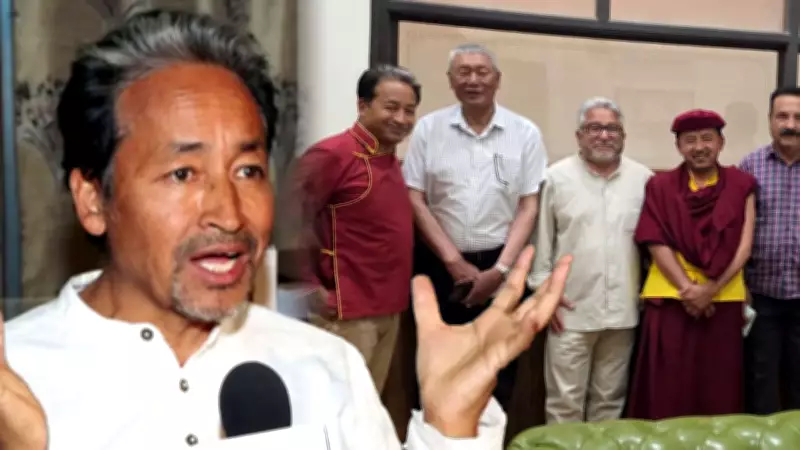
Sonam Wangchuk, the prominent climate activist and education reformer from Ladakh, has expressed grave concerns about the region's trajectory, stating that it was heading towards becoming 'another Manipur' before recent discussions with the central government helped de-escalate tensions. In his latest remarks, Wangchuk acknowledged the positive outcome of the recent engagement with the Union Home Ministry but emphasized that the trust deficit in the region remains far from resolved.
Wangchuk's Warning on Ladakh's Situation
Speaking to media on Monday, Wangchuk highlighted the fragile state of affairs in Ladakh, drawing a parallel with the ethnic violence that erupted in Manipur in 2023. He noted that the situation in Ladakh had been deteriorating due to unresolved demands for statehood, protection of land and employment rights, and cultural safeguards. According to Wangchuk, the lack of meaningful dialogue and action from the Centre had fueled frustration and mistrust among the local population.
'We were heading towards another Manipur. The anger was palpable, and the trust had eroded significantly,' Wangchuk said. He credited the recent talks with the Home Ministry for preventing a potential crisis, but warned that the government's credibility now hinges on delivering concrete outcomes.

Demands and Expectations from the Centre
Wangchuk outlined the key demands of the Ladakh region, which include the implementation of the Sixth Schedule of the Constitution to protect tribal rights, reservation in jobs and education, and the creation of a separate legislative assembly. He stressed that these issues have been pending for years and that the recent dialogue was only a first step.
'The trust-building process is incomplete. We welcome the engagement, but now the government will be judged by its actions, not words,' he asserted. Wangchuk also called for a time-bound framework to address the demands, warning that any delay could reignite tensions.
Background of the Ladakh Protests
The Ladakh region has witnessed sustained protests since 2019, when the central government revoked the special status of Jammu and Kashmir under Article 370 and reorganized the state into two union territories: Jammu and Kashmir, and Ladakh. While Ladakh was granted union territory status, local leaders and activists demanded statehood and constitutional safeguards to preserve the region's unique cultural and demographic identity.
In 2023, protests intensified after the government failed to address these demands, leading to clashes between protesters and security forces. The situation was further exacerbated by the lack of political representation, as Ladakh does not have an elected government or legislature.
Recent Talks and Government Response
Earlier this month, a delegation of Ladakh leaders, including Wangchuk, met with Union Home Minister Amit Shah in New Delhi. The meeting was described as 'constructive' by both sides, with the government agreeing to consider the demands and hold further consultations. However, Wangchuk noted that no concrete timeline or action plan was announced.
'We are cautiously optimistic, but we have been disappointed before. The government must now walk the talk,' he said.
Call for Urgent Action
Wangchuk urged the central government to act swiftly to prevent the situation from spiraling out of control. He emphasized that the people of Ladakh are patient but will not wait indefinitely. 'We are not asking for anything unreasonable. We are asking for what is rightfully ours under the Constitution and the promises made to us,' he stated.
He also appealed to the media and civil society to keep the spotlight on Ladakh's issues, warning that neglect could lead to long-term instability in the strategically important border region.
As the government weighs its next steps, Wangchuk's warning serves as a stark reminder that dialogue alone is not enough; it must be backed by decisive action to rebuild trust and ensure peace in Ladakh.






