

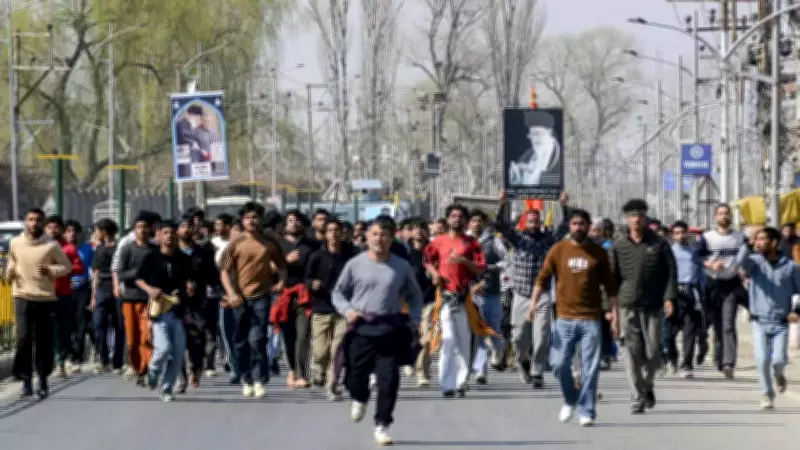
Srinagar Protests Continue Over Khamenei's Death in US-Israeli Airstrikes
Hundreds of Shia Muslims in Srinagar held demonstrations for a second consecutive day on Monday, protesting the killing of Iran's Supreme Leader Ayatollah Ali Khamenei in US and Israeli airstrikes. The protests, which began on Sunday, saw participants expressing grief and solidarity with Iran, with authorities deploying security forces to maintain order in sensitive areas of the city.
Marches and Mourning Rituals Across Key Areas
Groups of protesters marched through key stretches of Srinagar, chanting anti-US and anti-Israel slogans while observing traditional mourning rituals. Participants carried black flags and portraits of Khamenei, describing his death as a major loss for the global Shia community. In many parts of the city, traditional Nauha chants were heard, adding a spiritual dimension to the gatherings, which were termed mourning processions by many attendees.
Security Measures and Mild Force Used
Authorities increased security presence across Srinagar amid concerns over law and order as the protests continued. In a few areas, mild force was reportedly used by security forces to disperse crowds and prevent escalation, though the demonstrations remained largely peaceful. The protests were concentrated in Shia-dominated localities, where residents gathered to express their grief and stand in solidarity with Iran.

Religious Significance and Community Impact
For many Shia Muslims, Khamenei was regarded as a Marja-e-Taqlid, a respected religious authority, which added a profound spiritual element to the protests. The demonstrations highlighted the deep connection between the local community and global Shia leadership, with protesters emphasizing the loss as not just political but also religious. As the protests entered their second day, authorities maintained heightened vigilance across sensitive locations to ensure stability in the region.






