

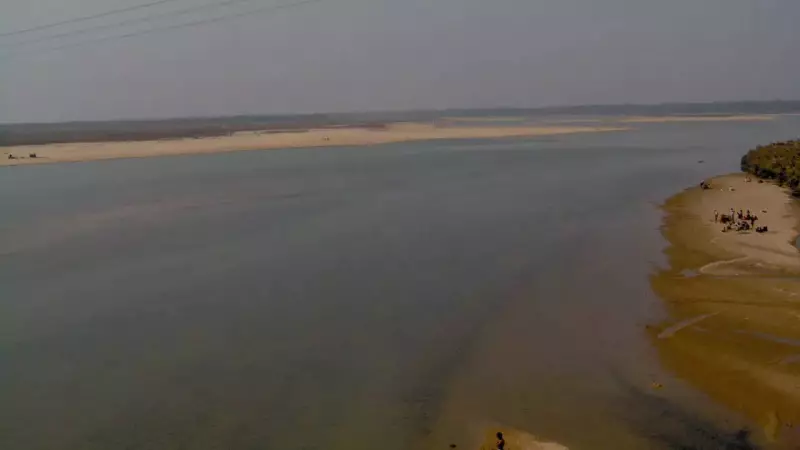
In a land where rivers are often named for gods, colours, or regions, one waterway stands apart for a name rooted in the very earth it flows over. The Subarnarekha River, meaning "streak of gold," is a rare example of geology-based nomenclature in India. Flowing through the mineral-rich terrains of Jharkhand, West Bengal, and Odisha, its ancient name is a direct testament to the golden legacy of its basin. Today, this name is resurfacing on the modern scientific map, attracting researchers keen to unravel the deep Earth processes that explain its auriferous character.
The Ancient Geological Stage of the Subarnarekha
The Subarnarekha carves its path across the eastern part of the Indian Shield, a continental fragment that has existed for over two and a half billion years. This shield contains some of the planet's oldest rocks, heavily deformed by immense tectonic pressures over eons. Within this ancient setting lies the North Singhbhum fold and thrust belt, a zone marked by significant structural complexity and hydrothermal activity. Such environments are prime real estate for gold accumulation, particularly where the precious metal is found within quartz veins alongside sulphide minerals.
A scientific study published in Ore Geology Reviews provided crucial evidence, detailing the presence of invisible gold within pyrite found in quartz reefs at Babaikundi. Through meticulous microscopic and chemical analysis, the research offered a concrete scientific basis for the river's gold-bearing reputation, moving the narrative from folklore to empirical fact.

Unseen Treasure: The Mystery of Invisible Gold
Unlike classic goldfields where nuggets glitter in the pan, the Subarnarekha goldfield operates on a microscopic scale. Here, gold is predominantly invisible—dispersed within the crystal lattice of host minerals like pyrite, rather than existing as distinct grains. This form of gold is characteristic of ancient metamorphic regions, where gentle heat and pressure over vast periods have allowed gold-carrying fluids to permeate the host rocks.
In the Subarnarekha region, these fluids travelled through conduits known as quartz reefs, with pyrite being the primary host rock. This invisible gold cannot be spotted by the naked eye; its presence must be confirmed through specialised testing, revealing wealth hidden within otherwise non-descript stones.
From Bedrock to Riverbed: Gold's Journey
The journey of gold from solid rock to river sediment is a saga of relentless natural forces. The hard rock formations, including the gold-hosting quartz reefs, are not impervious. They face constant physical and chemical weathering. In the Subarnarekha drainage basin, the intense monsoon rains dramatically accelerate this breakdown process.
The pyrite-bearing quartz reefs crack, oxidise, and are gradually eroded. The gold, once locked inside the pyrite, is liberated in an extremely fine, decomposed form. These dense, gold-bearing sediments, resistant to further chemical breakdown, are then washed down slopes and into the waiting river channels by the force of water and gravity.
Where the Gold Settles
Once freed, gold behaves differently from lighter sediment. Its high density causes it to settle in areas where water flow slows down, such as inside river bends, at confluences, or behind large obstacles. Over time, even minute particles can accumulate at these specific sites, creating placer deposits. This natural sorting by the river's flow is why gold is traditionally found in sand and gravel bars, not on rocky outcrops. Periodic flooding events can then redistribute this fine gold dust across wider areas of the floodplain.

Echoes of the Past: How People Discovered the Gold
Long before modern geology provided explanations, local communities recognised the unique quality of the Subarnarekha's sands. Historical accounts and travelogues speak of traditional gold washing activities, especially during the dry season when water levels were low. Using simple wooden trays or pans, people would separate heavier materials from the riverbank sands. Colonial authorities and early geologists later documented these small-scale extraction activities, which, while never sparking a major gold rush, validated centuries-old local knowledge that intrinsically linked the river with gold.
Why the Golden River Still Matters to Science
The significance of the Subarnarekha extends far beyond the potential value of its gold deposits. The river's watershed serves as a natural laboratory for understanding ancient gold mineralisation processes, particularly those involving invisible gold. This knowledge is invaluable for modern mineral exploration, especially in terrains where visual signs of ore are absent.
Furthermore, studying this system has important environmental implications. Understanding the weathering of sulphide minerals (which host the gold) is crucial for assessing their impact on water and sediment quality. The Subarnarekha, therefore, represents a living archive—a surface-level record of profound geological processes that originate deep within the Earth, its name a perfect echo of the science it embodies.





