

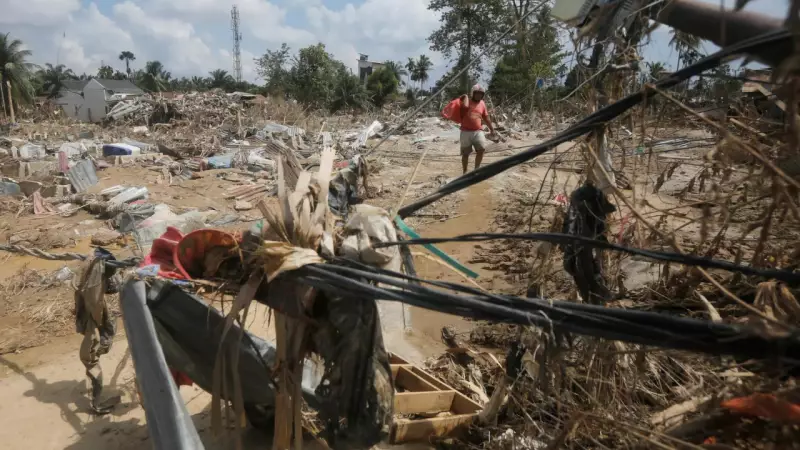
Catastrophic flooding and a series of landslides have claimed the lives of more than 900 people on the Indonesian island of Sumatra, with authorities raising a dire alarm on Saturday. They warn that starvation in remote, inaccessible villages could significantly increase the final death toll.
Scale of the Catastrophe Across Southeast Asia
The country's disaster management agency confirmed the grim figure in a weekend briefing. This tragedy is part of a wider pattern of extreme weather that has ravaged Southeast and South Asia over the past week. A succession of tropical storms and intense monsoon rains has triggered deadly landslides and sudden floods, from the rainforests of Sumatra to the highland plantations of Sri Lanka.
The cumulative death toll across Indonesia, Sri Lanka, Malaysia, Thailand, and Vietnam has now surpassed 1,790 lives. In Indonesia's Aceh and North Sumatra provinces, the disaster's fury is unmistakable. Raging floodwaters have torn apart roads, buried homes under thick layers of sediment, and completely severed critical supply lines.

Desperate Search and a Looming Hunger Crisis
Search and rescue teams in Aceh are still working to retrieve bodies from what provincial governor Muzakir Manaf described as "waist-deep" mud. However, the most pressing concern for officials has now shifted. The gravest threat is the growing risk of hunger in villages that remain completely cut off, days after the initial disaster struck.
"Many people need basic necessities. Many areas remain untouched in the remote areas of Aceh," Governor Muzakir stated. He delivered a chilling assessment: "People are not dying from the flood, but from starvation. That's how it is." He added that entire communities in the forested Aceh Tamiang region have been obliterated. "The Aceh Tamiang region is completely destroyed, from the top to the bottom, down to the roads and down to the sea. Many villages and sub-districts are now just names," he said.
Survivors recount harrowing tales of survival. Fachrul Rozi, who fled from Aceh Tamiang, said he and others spent a week crammed inside an old shop with minimal supplies. "We ate whatever was available, helping each other with the little supplies each resident had brought. We slept crammed together," he told reporters.
Frustration Mounts Over Response and Underlying Causes
As rivers begin to recede, revealing the full scale of destruction, frustration is growing among survivors who feel the disaster response has been inadequate. Aceh resident Munawar Liza Zainal expressed feeling "betrayed" by the central government's reluctance to formally declare a national disaster. Such a declaration would unlock greater resources and improve coordination between agencies.
"This is an extraordinary disaster that must be faced with extraordinary measures," he argued. "If national disaster status is only declared later, what's the point?" Some analysts suggest the government may be hesitant to seek international assistance for fear of appearing incapable. Officials, however, maintain that the situation remains manageable.
While monsoon rains are vital for the region's agriculture, scientists warn that climate change is intensifying these weather patterns, making them more erratic and dangerous. Both environmentalists and Indonesian officials acknowledge that rampant logging and deforestation in Sumatra have exacerbated the landslides and flooding, dramatically worsening the impact of this year's natural catastrophe.
The disaster's ripple effects are felt across the region. Sri Lanka's death toll climbed to 607 on Friday, with authorities warning that renewed rainfall could trigger more landslides. Thailand has reported 276 deaths, while Malaysia and Vietnam have each recorded at least two fatalities linked to landslides.






