

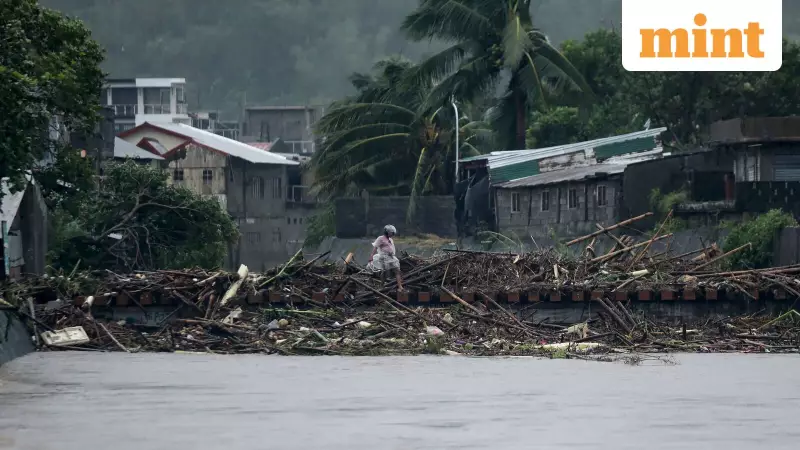
Super Typhoon Fung-wong, one of the most powerful storms to threaten the Philippines in years, made a devastating landfall on the country's northeastern shores on November 9, 2025. The typhoon unleashed catastrophic winds reaching 185 kilometers per hour, resulting in at least two fatalities and the massive displacement of over one million people from areas susceptible to floods and landslides.
Widespread Devastation and Rescue Efforts
The typhoon struck Dinalungan town in Aurora province on Sunday night, following a day of intense offshore activity. With sustained winds of 185 kph and powerful gusts up to 230 kph, the storm brought torrential rain and created near-zero visibility conditions, severely hampering rescue operations.
Officials confirmed one villager drowned in flash floods in Catanduanes province, while another person in Catbalogan city, Eastern Samar, was killed by flying debris. Roberto Monterola, a disaster-mitigation officer for Catanduanes, described the terrifying scene to The Associated Press, stating that the ferocious rain and wind made visibility nearly impossible.

Despite pre-emptive evacuation orders issued on Saturday, many residents chose to remain in their homes. Disaster response teams were forced to conduct daring rescues, saving 14 people trapped on a rooftop in a flooded neighbourhood and evacuating a family of five whose house was on the verge of having its roof torn off by the violent winds.
Mass Evacuations and Government Response
Authorities executed one of the largest evacuation operations in recent history, moving more than a million residents from high-risk coastal villages and regions prone to mudflows from the active Mayon Volcano. The scale of the potential disaster prompted President Ferdinand Marcos Jr. to declare a state of emergency, citing the extensive damage from the previous Typhoon Kalmaegi and the impending calamity from Fung-wong.
Defense Secretary Gilberto Teodoro Jr. had issued a stern warning in televised remarks on Saturday, emphasising the storm's potentially catastrophic impact. The Office of Civil Defence estimated that over 30 million people could be exposed to the hazards posed by Fung-wong's enormous 1,800-kilometer-wide rain and wind band.
Teodoro urgently appealed to citizens to follow government evacuation orders, stressing the critical importance of moving to safety before the typhoon's arrival. "We need to do this because when it's already raining or the typhoon has hit and flooding has started, it's hard to rescue people," he explained.
Transport Chaos and International Preparedness
The approaching storm caused widespread disruption across the archipelago. Several eastern towns and cities lost power, while authorities preemptively shut down schools and government offices for Monday and Tuesday. Transportation networks were severely impacted, with 325 domestic and 61 international flights cancelled and over 6,600 commuters and cargo workers stranded at seaports after the coast guard prohibited ships from sailing into the rough seas.
Authorities issued a grave warning about a "high risk of life-threatening and damaging storm surge" exceeding 3 meters along the coasts of more than 20 provinces and regions, including the densely populated metropolitan Manila area.
While the Philippines has not yet issued an international call for aid following the devastation caused by Typhoon Kalmaegi, Defense Secretary Teodoro confirmed that the United States and Japan are prepared to provide assistance if requested. The nation, which faces approximately 20 typhoons annually, continues to demonstrate resilience in the face of one of the world's most challenging disaster environments.






